Saturday, 18 January 2014

Weather with You

Ah Melbourne, I love you but not your weather this past week. Five consecutive days over 40C (104F), followed by a dramatic barometric change, drop in temperature by about 20C, and increased humidity. What the hell, Melbourne? Heatwave records broken across both here and South Australia.

What does this do to a girl? It aint pretty my friends. It aint pretty.

This is how I started the week.

Ooo look at me with my Hydrolyte icypole. I've got this heat thing sorted.

This is how I it ended it....

 My name is..............?

Weather is a such a huge factor in how I feel. Heat and cold both affect me. And I have even less control on my body temperature than I did even a year or two ago. (For example, Mr Grumpy walked into our 44C bedroom yesterday to find me in my warmest dressing gown sitting on the bed. He took one look at me, I said "sudden temperature drop", and he kept on walking un-phased. I've clearly been weirdly ill for waaaaaay too long.) And humidity is the icing on a really crappy weather cake. 

I hate the drops as much as sudden rises. My body temperature drops at the oddest of times. And when it does I feel like I've been suddenly dipped in an icy river and have weird full body shakes/contortions/myoclonus. Take my temperature and it's dropped to 35.2-35.5C. Sometimes it happens with no discernible trigger. Other times stepping out into the cold will set off uncontrolled shivers and I can't stop my jaw from madly shaking and my teeth from chattering. It tends to leave me exhausted and sore, long after I manage to get my temperature back up.

But the heat. Especially prolonged heat, with little to no relief overnight, takes its toll. I was watching an ambulance paramedic on the news talking about the accumulative effect of day-after-day of extreme heat. And it's true. It adds up. 

There is only so much my body can take. And that tipping point was Wednesday night/Thursday morning. Heat induced vomiting. Cramping. Diarrhoea. Confusion. Feeling completely overwhelmed. Dehydration despite drinking litres of fluids. Tachycardia (well tachycardia for me and my slack heart). Arrhythmia. Oscillating blood pressure. Shakes. Weakness. Facial droop. Dry mouth. Headache. Overheating (38-39C). A complete and utter mess spiralling down. All without a drop of perspiration thanks to anhidrosis.

Even having IV Saline on Thursday (thank goodness that had already been planned) I still had to vomit in the loo at the hospital. I came home only a little less exhausted than I went in, though I was still happy to have that slight reprieve.

Friday a wipe off. 

Saturday a different level of unwell thanks to oppressive humidity. My muscles are uncoordinated and weak. My whole body aches and nausea is peaking. The air pressure leaves me feeling overwhelmed. Headaches that don't respond to meds. Trying to swallow simple food too complex for my exhausted body, and I spend 10 minutes drinking water to try and move the food that seems like it is stuck in my throat forever. Pre-syncope my constant companion. My skin texture changes. My complexion, sallow at best. My facial muscles useless, unresponsive blancmange. This is what unrelenting heat followed by humidity, does to my body

Even with fluids, airconditioning, ice packs or frozen Hydralyte icypoles, there comes a point where the heat simply gets too much to bear. 

Heat intolerance and poor thermoregulatory control are common symptoms of Dysautonomia. And some of the hardest ones to manage. They can be disabling at times and impact on all aspects of life. From my dental visits where I lie in the chair with icepacks and my dentist turns on the airconditioner, even in Winter, to being unable to bear the warmth of even light clothing after a shower, or needing to strip off after eating a hot meal. It impacts upon your ability to leave the house or socialise. It means you leave your house with multiple layers of clothing to try and accommodate whatever temperature your body throws at you. It also means your family are no longer surprised when you are wrapped up in blankets on a hot day or wearing t-shirt and shorts in the middle of Winter. If you're not careful a hot Summer day or a cold Winter days can be the catalyst for a full body melt down.
 
Weather has such power to influence how my body functions, or doesn't.

That single factor can make or break a day, before I even leave my bed. 

That single factor decides if I can step outside, make my breakfast, remember my meds, or even stand.

Living with Dysautonomia is all about managing symptoms and avoiding or minimising things that aggravate the condition. Sadly the weather is one factor that can have a huge impact on us, and one we can't control.

The week ahead is thankfully cooler. But we haven't yet hit our hottest months. But that's a problem for another day. Today the recovery from last week begins.

Cheers
Michelle


Don't forget to check out my Clicking my Heels for Dysautonomia fundraising forThe Greg Page Fund for Orthostatic Intolerance, and the Baker IDI. Nearly at $1,500 already!

Tuesday, 14 January 2014

Planning your travel by toilet: The National Public Toilet Map


Next week is our big move. We're moving from the city to the country, a 2 1/2 hour trip. Given that the most I've driven for the past few years is the 45 minutes into town for my specialist appointments, such a long trip is a cause for concern. One of the main reasons for stress is that I need a toilet, frequently.

My body does not like travel. Without fail it wants to expel fluids from one end or the other. I do tend to prepare for my trips by taking both Imodium and Desmopressin, in the hope I can last just a little longer. But frequently even these medications aren't up to the task. Something about the movement of the car sets my bowel and bladder into overdrive.

For a long time I have planned my short trips by toilet. I know where all my local public toilets are located, and which are more likely to be clean. I also have a list of clean toilets I can use on the routes to my specialist appointments in town. Having such a list alleviates some of the anxiety of travelling.

With this big move the worry about toilet availability during the trip has arisen again. Thank goodness for The National Public Toilet Map (NPTM), provided by the government through The National Continence Program.

This program has a listing of over 14,000 public and private toilets across Australia.

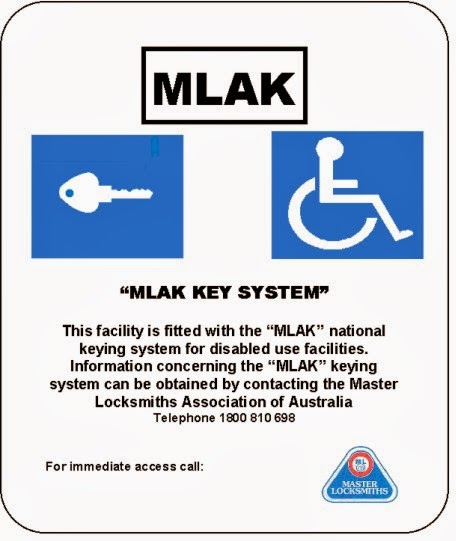
The NPTM is easy to use and can even be personalised. For example, you can specify a search for disabled toilets. And specifies open times (information regarding the MLAK program which allows 24hr access to toilet facilities for the disabled, can be found at the bottom of the post), listing of facilities and even if they are accessible directly by road.


You can easily pop in an address to find public toilets in your local area. I thought I knew all my local public toilets, but now have a total of 10 to pick from thanks to the search function.

The trip planning function is particularly handy. I simply typed in my starting suburb and destination and numerous options came up. Phew.


Look at all those lovely, anxiety reducing, markers.

You can go further into the application to see a more thorough listing of each marker. Including location, type of facilities and opening hours.


Clicking onto each entry takes you to a map of the area so you can find your way to the facilities.


And you are sorted.

I can't stress how much this decreases my anxiety about travelling. Whilst it wont alleviate many of my symptoms that arise with travel, plus the stress of moving to a new area, knowing that I can find a toilet if needed, rather than running behind a tree, or having to resign myself to using a bucket if there is naught but open fields on the road side, takes a huge weight off.

The NPTM is available for iPhone. Those of us on Android can bookmark the website on our phones, though hopefully an Android app will be provided.

Master Locksmith Access Key (MLAK)


The Master Locksmith Access Key or MLAK program allows people with a disability to access locked toilets, playgrounds and other facilities with a specific lock. These locks have been fitted to:

  • Elevators at railway stations. 
  • Accessible toilets in Council municipalities 
  • National parks.
  • Adaptive play equipment such as the Liberty Swing.
There is a fee involved (approx. $10) and access restricted to those with a disability, or those who have written confirmation by a doctor, disability organisation, community health centre, or the owner or manager of a site with an accessible toilet on the site. Keys can be accessed by contacting a Master Locksmith.

A listing of MLAK enabled facilities is provided by Spinal Cord Injuries Australia.

Tips

The Continence Foundation of Australia also has a list of handy Travel Tips, for travelling with any continence issues.

Personally, I always travel with a kit, part of which is a dedicated Toilet Kit. My Toilet Kit includes:
  • Toilet Paper
  • Sanitising wipes
  • A plastic bag
  • Change of underwear
  • Towel
  • Bucket
  • Imodium
  • Desmopressin
This kit has proved it's worth on many occasions.

Travelling when you have continence or frequency issues, either faecal or urinary, can be very stressful. I hope these tips can help alleviate some of that stress.

Similar toilet maps are available for many countries, and even some cities eg New York.

Cheers
Michelle :)

Wish me luck on our road trip.


Don't forget to check out my Clicking my Heels for Dysautonomia fundraising for The Greg Page Fund for Orthostatic Intolerance, and the Baker IDI. Nearly at $1,500 already!

Sunday, 12 January 2014

It's the lack of a permit NOT that they don't 'appear' disabled.


Some days here on the blog I feel like I am beating my head against a brick wall. I have been writing about invisible illness and the inability to judge either illness or disability by look, for 4 1/2 years now. In that time I have seen little change. And when the headline above came up in my news feed on multiple social media streams I may have had a little FFS moment. Followed by a mixture of frustration and disappointment, and more FFSs.

A famous Australian footballer and his model girlfriend parked in a disabled parking bay whilst he spoke on the phone, and she ran into the 7/11. Yes, we should be angry. Such casual unauthorised use of a disabled parking bay is rife and smacks of as arrogant disregard for both the law and those for whom these spaces were created. But anger should not arise because they don't "appear disabled", instead outrage should be engendered because they didn't have a parking permit that acknowledged that they have a disability that necessitates the use of that parking space. As such they have broken the law and thumbed their nose at the disabled community.

In all likelihood a top athlete and his model girlfriend are unlikely to have a disability that necessitate the use of the parking bay, but I can't tell this by their appearance, and neither can anyone else.

Look, appear, seem.... 


Here we are again with sloppy journalism that is representative of the views of the wider community. Back to the limited idea that all true disabilities are visible. The corollary of such a view is that if you can't see it, it's not a real disability.

There is a pervasive idea in the wider community that:
a) True disability is visible, most commonly involving a wheelchair.
b) That the illegal use of parking permits is rife.
c) That it is easy to obtain a parking permit.

a + b + c = people without a wheelchair, who look well, are frauds and should be called out/ridiculed/abused.

For those of us with a hidden or difficult to see disability, this can frequently lead to abuse. People are feeling forced to explain their disability and justify their permit, when frankly it is no one else's business.

If checks are to be made regarding the use of permits, it is not up to the average person to question whether the user is disabled. It should be happening at the level of the doctor's office. I was unable to receive a permit without my doctor verifying my medical condition, mobility issues and the aides I use to mobilise. She also had to indicate the length of my disability and if this state was to change. I did not simply waltz in, grab a signature, and waltz out. If there are doctors rubber stamping permit applications, that is where the problem needs to be addressed. Not when someone who appears well, emerges from their car. Yes there will be people who swipe a family members permit to use illegally. But you cannot instantly discern from a quick glance if the person emerging from the car is legitimately disabled or a lawbreaker. Equally councils who approve permits, should follow up with recalling permits for citizens who are deceased or no longer have a need for them.

If however, there is NO permit then people have the right to question, photograph, or call the police.


Question the lack of permit, not the lack of visible disability.

Many are the days that I don't look disabled or sick. I may not always require my wheelchair and may rely of my stick to save the hassle of getting my wheelchair out eg to make the short walk to the Post Office. I may, on occasion, have walked/staggered into the post office without my stick (usually because the lack of adequate blood flow to my brain thanks to my medical conditions, means I have a memory like a sieve and have left it at home or in the back of the car).

This doesn't mean I don't need to use a disabled parking space. Indeed I require it because to stand and walk 10 metres changes such a simple chore into a Herculean task. Parking 20 metres from the Post Office can mean that I am unable to make it to the Post Office. Having to step over a curb rather than use the small ramp can leave me teetering and at risk of a fall. Or, if I do make it, I am forced to sit in the gutter (I am well acquainted with my local gutters thanks to stubborn/stupid pride that made me put off applying for a permit until well after it was required) on the way back to the car to avoid passing out, or my legs collapsing. It also means that I am unable to drive home safely after, as all my reserves have been spent on those extra 10 metres, and I am now so highly symptomatic I am unlikely to be able to discern right from left, or even change the radio station from soft rock to alternative.

I shouldn't have to explain all of the above because a person takes it upon themselves to question my use of a Parking Permit. Because thanks to my perfectly coiffed hair, fabulous dress style and stubborn determination you are unable to see that my body is slowly shutting down inside and I have very limited standing, talking, conscious, time left.

Even members of the medical community are unable to spot a disabled person at 100 paces. Hence the frequent "you look too well, young, pretty etc, to be sick" comments heard by patients in many a doctors office. Pain isn't visible. Neither is my rapidly dropping blood pressure. Nor my legs that are about to fail. So why should the wider untrained community or a lazy journalist, be better able to spot disability, be the person a model, a football player, or a woman simply wanting to pick up her medical compression stockings from the mail? The simple answer is that they are not able.

The Telegraph's headline does little for the disability community and simply perpetuates the sadly common misconception, that all true disabilities are visible. And causes harm, and frequently confrontation, for those who don't meet the limited view of what constitutes disability.

Yes, they should not have parked in the disabled parking bay. They should be held to account and should be fined for their flagrant disregard for the law and the disabled community. But not because they didn't APPEAR disabled.

The issue is NO Permit, NO Park

Nothing more and nothing less. 

We can question the morality of their conduct. 
We can examine their sense of entitlement. 
But that has nothing to do with whether or not they appear disabled.


As a society we must move past the limited idea of what constitutes a disability. We are continuing to create harm by such comments, which as the headline above shows, continue to be reinforced by the mass media. It is time for the media to lead the way in their reporting of disability issues and not perpetuate unhelpful and harmful myths.

Michelle

More information about Disabled Parking Permits and issues such as these, can be found at No Permit, No Park.

Thursday, 9 January 2014

Today I went to a cafe.


Today I went to a cafe.

"And.......?" I hear you say.

It may not seem a big deal to most. For many it is a common, or even daily event. But not for me. I can go months without heading to a cafe. Or anywhere really. Well anywhere other than needed medical appointments, which, when you think about it, are hardly a source of excitement.

I have tried many different ideas to help me get out more. Compression stockings. Extra medications. Even a wheelchair, so I at least take the exhaustion and symptom exacerbation that comes with being upright and walking, out of the equation. But my overall level of decreptitude frequently means that heading to a cafe and all the logistical issues that come with that outing (showering, getting dressed, travelling, finding somewhere with air-conditioning, a place I can put my feet up,....) , are just beyond me. I have a finite level of energy reserves, and of late they have been on a steady decline.

"So how did this miraculous outing happen?" I hear you ask.

The answer:

One litre of salty water shoved in my vein. That's it. That's all. No more. No less. No tricks. No secrets. No magical talismans.

I have no idea why this is so effective. There are multiple theories. But in truth I don't care. It works and that's enough for me.

I drink my 2-3litres of fluids each day. I increased my salt intake. I use both Florinef and DDAVP, both medications designed to make my body hold onto fluids rather than peeing them out.

And yet....

I drink. And then I pee. Often more than I originally took in (and yes I have spent a day collecting and measuring my pee, doesn't everyone?).

But with slow IV administration it stays in. I'm not running to the loo every 3 seconds like I am with oral fluids. And because it stays in, it works.

My headache that has been continuous since Christmas day is gone. And whilst I am tired (I arrived at the hospital at 9:30am and didn't leave until 3pm) that general level of malaise that I have every single day is gone or at least greatly decreased. Tired without that ever present level of indefinable unwellness is a whole different ball game. I have colour in my cheeks and feel mentally brighter. I am still tired but feel better, and more importantly more functional, than I have in months.

And when my eldest said, "do you want to go for a coffee, Mum?"

I actually said, "Yes".

I don't care whether IV Saline remains a controversial therapy in some medical circles.

I don't need their approval.

I do know I have a cardiologist, a GP and a local Day Procedure Unit who were willing to give it a go.

And today I sat in a cafe with my son and had a coffee.

And that to me is a successful treatment.

Cheers
Michelle :)


Don't forget to check out my Clicking my Heels for Dysautonomia fundraising for The Greg Page Fund for Orthostatic Intolerance, and the Baker IDI. Nearly at $1,500 already!

Thursday, 2 January 2014

Happy songs for less than happy days.

The last few months have been pretty big on the bleech side of the ledger. I could bore you all stupid (and myself if I'm honest) whilst I list off all my woe-is-mes. But really that wont change the majority of them. My other option is to pick myself up. Dust myself off.  And at least attempt to find my happy place. I've found it in the past and I know I'll find it again. But sometimes you have to do the hard yards before you get there.

As part of that journey I have been using music. Lots of different types of music, for all sorts of genres. But I decided to push a bit more and be a bit more direct for my dull brain and find Happy songs ie Happy or some version of the word in the title. So here's a bit of a list of my latest listenings, plus a few suggestions from my trusty friends on Facebook.

So if you're feeling a little down play a few and sing along. Play them loud, dance away, tap your fingers or your toes. Break out some fabulous spirit fingers or dance in your mind. What ever takes your fancy.

And hopefully they can bring a little joy.

Personally Judy and C2C tend to be my play it loud and sing along songs of choice, but there's a little something for everyone.

1. Pharrell Williams, Happy (2013)
 

2. Goldfrapp, Happiness (2009)
 

3. C2C, featuring D. Martin, Happy (2012)

4. Judy Garland, Get Happy (1950)
 

 5. REM, Shiny Happy People (1991)
 

6. Boney M., Happy Song (1984)
 

7. Kermit the Frog, Happy Feet 
 

8. Bobby Ferrin, Don't Worry Be Happy (1988)

9. Otis Redding,The Happy Song (1968)

Feel free to add any others in the comments.

Cheers
Michelle :)

Thursday, 19 December 2013

So it seems I've found my Holy Grail and it's goat-shaped.


Dysautonomia is a weird collection of illnesses. Even if you are lucky enough to find your subtype (eg Postural Orthostatic Tachycardia Syndrome (POTS), Neurocardiogenic Syncope (NCS), Pure Autonomic Failure(PAF)) that is no guarantee you'll know the specific cause of your subtype. One glance at patient forums and you'll find that the majority of patients seem to have either no, or only a rough, idea of what is causing their symptoms. It's one of the conundrums with research in the area. Even in a room full of POTS patients, the causes can be as varied as autoimmune diseases, mitochondrial disorders, connective tissue disorders and a plethora of genetic conditions. If you're stuck with only a weird collection of autonomic symptoms (waves from this side of the keyboard) the choices are even greater. But we all hold out hope of finding our particular cause.

You see until you know your underlying cause all you are doing is managing your symptoms. That's not a cure. And frequently, given the complexity of our presentations, not all that successful. Finding your cause is the illness equivalent of the quest for the Holy Grail. Something very few seem lucky enough to do, either due to complexity or a lack of medical support. But a cause gives you something to actively treat and potentially, cure.

I can't even begin to articulate how important having a name for what you are experiencing can be. Legitimacy, tangibility, hope. It's all wrapped up in that diagnostic title. The shadow is gone. The grey is gone. And good or bad, the defeat of that uncertainty, can be an amazingly cathartic experience.

For seven years I have sought my Holy Grail. Frequently, the search has been more Monty Python-esque, than inspirational quest. I have lived the hope/disappointment cycle throughout. Hope for a cause/diagnosis/treatment, and disappointment time and again. I wrote about the toll it takes way back in my first post:

"How do you explain to someone that not getting a serious or life-threatening diagnosis is disappointing? After months of living with uncertainty and the fear and the doubt it generates, you start to long for a concrete diagnosis no matter what it is. How do you plan your life or explain your illness when it is this shadow being that can’t be measured or understood. I’m a rather practical kind of person. If I know what it is I can educate myself, I can plan my life; I can do what needs to be done. I can be legitimately ill." (July, 2009)

It's exhausting.  

After seven, nearly 8 yrs now, I went into my neurology appointment on Wednesday with mixed feelings. The neurologists who conducted my SFEMGs said they were pretty sure they'd found my cause. Since then I have lived with a mix of excitement, dread (the look on their faces was less than encouraging), and the resignation that it could have been nothing more than yet another diagnosis-tease.

But it seems the completely unexpected abnormalities they discovered have led me to my grail.

Not Myaesthenia Gravis (MG) as was expected. No it couldn't be that simple. I had resigned myself to MG. Had started the research process and moved forward. There are treatments. There is research. There are organisations. But no.


You see those pesky out of left-field abnormalities led me down a different path. Myotonia. Or to be more precise,


What you haven't heard of it? Me neither. Yep, I have developed something no one has heard of (again). Even better I have developed something for which there is no treatment (well there's one, but it damages your heart and as my neuro admitted very few of her patients take it). That is degenerative. That is progressive. That, and what is stressing me the most, is autosomal dominant.


I did bloods on Wednesday to try and narrow it down from the 3 possible subtypes, two of which are systemic and have an autonomic component. So now I have to wait, again, until March for those answers. How much it explains my autonomic issues? I'm unsure. Is it an all or partial answer is unclear and even the available research seems to disagree? For now I'm putting it all aside and concentrating on getting through Christmas.


I like my neurologist. She's calm, caring and practical. That works well for me. I'm extremely lucky that she has taken this journey with me and never given up. She has held my hand, directed when needed, and listened to my need to find an answer and helped me achieve that. Something very few patients seem to experience.

She didn't even bat an eyelid when I asked for the 12th time "are you sure there are no other possible causes?"

(This is the face of someone for whom 12th time is not the charm.)


Looking back it was all a bit surreal.

Me dolled up with my Dorothy shoes. My son taking photos all over the room. Discussions about glitter trails throughout her rooms. Me reading and re-reading the paperwork from the neurophysiology department. All whilst being told that I have a degenerative neuromuscular disorder and organising genetic sequencing.

All the while documenting the moments of what it's like to get one of those diagnoses. 

After so many years ill, and so many years of the hope/disappointment cycle, it simply left me numb. I remember smiling. Laughing at a joke. Asking questions. And underneath it all, numbness.

If this was the start of my illness journey I think I may have freaked out far more, but now? That I have a degenerative condition is not a shock. That's been clear to all and sundry. That my muscles have been deteriorating? Also not a shock. I can see the muscle wasting in my right hand and on the left side of my face, and the weakness is spreading. I knew whatever was happening, my health is deteriorating and I'd come to terms with that a long time ago. As Mr Grumpy pointed out the other day, I am far more resilient these days. Far more than at the start. And you do have to find a way of coming to terms with your lot in life, otherwise the toll is too great to bear. However, I do reserve the right to freak out in the near future. To cry and yell and rock in the corner.

That evening my eldest son got it into his head that after such a day I needed a margarita. So out he went and brought all the ingredients and made me a large margarita in a salt rimmed glass. He's a good boy.


But for now numb, compartmentalisation, blinkers, denial and margaritas (well one margarita, and a week later I still feel hung over) are my method of coping.

Plus, at the moment, I just can't face talking about it again.

Oh and my love of goats now makes sense as one of my 3 options, Myotonia Congenita, is the same disorder that afflicts the famous Fainting Goats. They truly are my animal!

Michelle

I was going to add the obvious Hunters & Collectors classic Holy Grail as my musical accompaniment. But I think Throw Your arms Around Me, is more appropriate, because dear readers, I could do with a big virtual hug right about now.  

Monday, 16 December 2013

And here we are again. *sigh*

Today this came up in my Twitter feed. 


And I felt myself let out a big disappointed sigh.

I'm a big fan of Nathan Fillion. Firefly is up there with my all time favourite scifi programs (one season was seriously not enough, though the movie Serenity did help soothe the loss). And really this isn't a post to slag off at him personally. He's not the first to make note of people who can walk using wheelchairs as a joke. Or even an object of derision. Or, as many have found, an object of abuse. But his tweet grated. And given some of the responses it would seem I'm not alone.

You see it's not even this single tweet. It's fairly tame as these things go. Though in a way that makes it worse. It's that subtle and casual message that some people don't meet the mark of real disability and therefore lose the right to respect, and become the object of a joke. It highlights the challenges many of us, myself included, encounter when we are able to walk a short distance but need a wheelchair for longer distances, or longer times. It highlights the general lack of understanding in the community. And the pervasive idea that disability can only be defined by a very narrow set of parameters. And I doubt we would have seen a tweet that read "Girl in wheelchair, wheeled over to get a photo with me"

I've spoken at length about my experience with a wheelchair. But for the new reader let me sum it up in a few dot points.

  • I have a disorder which for the most part isn't visible.
  • I can walk short distances. Eg if the disabled toilet is locked or in use, I can grab my cane and stumble to the regular loos if desparate.
  • I cannot walk long distances, eg 50m is a stretch.
  • I cannot stand for prolonged periods. Some days that is 10 mins, others 10 seconds.
  • I am fatigued by even small amounts of standing or walking.
  • Standing or walking can leave me throwing up, falling down, or comatosed for a week.
  • If I don't use a wheelchair I can't really leave my house.
  • I have worked long and hard to get to the point of accepting that I need to use a wheelchair.
  • I know other people judge me for looking well and being in a chair, for looking young and being in a chair, for getting out of my chair and walking 3 steps or using my cane to go to the loo.
  • I live with that every time I go outside my home, and dare to use my wheelchair.
  • I hate having to use it and what it represents for me and my health.
  • I hate that other people have limited ideas of what disability means.
  • I hate that other people feel that me getting up out of my chair is a joke. (And yes, I know people who have had things like "it's miracle!" yelled at them when they get out of their chair for 5 mins.
  • I hate that I have to justify and explain it's use. Again.

I also know that Nathan Fillion doesn't know all this. And neither do the majority of the community. Hence it is note worthy, or humour inducing, when people manage to leave the confines of a chair for 3 minutes, when they are excited to meet one of their TV heroes.

The old responses, "get a sense of humour", "it's a joke, people" (not by Mr Fillion I want to make clear, but by some of his followers) etc, assume that we disabled folk don't have a sense of humour. Let me tell you, when you are dealing with severe chronic illness for years on end you have to develop a sense of humour. Quite a good and dark sense of humour in fact. It's a survival mechanism. The idea that it is joke and it is my fault for getting pissed off, is aimed at silencing my voice. Shut up and don't be heard faux-wheelchair girl. "It's a joke" continues to be the excuse of choice whenever those who are the target of a joke dare to raise their voice.

Am I too sensitive? Probably. I have lived with this for years now. And it impacts me every time I go out. When you deal with ignorant and hurtful comments on an ongoing basis, it kind of sensitises you to these things. But I am not here for your entertainment. My disability and declining health, not fodder for amusement. And should I meet a favourite celebrity, not worthy of a wry tweet.

For years I avoided using a chair even when I really needed it, because I knew attitudes like those above were the consequence. I had internalised them to mean that I obviously didn't need a chair because I could walk 20m. I was a fake. A fraud. Breaking through those thoughts took a long time and much pressuring by my family. I fight those feelings every time I plonk my bum in that chair.

So,

Dear Mr Fillion, I will continue to love Firefly. How could I not? But I will now carry a little pit of disappointment with me, that you think a fan getting out of her wheelchair to get a photograph with you is worthy of note and humour.

Michelle

Sunday, 15 December 2013

Don't touch my wheelchair.


The past 6mths I have been using Vera, my trusty wheelchair, far more. Distance is my kryptonite. Between weakness, uncoordinated muscles, low bp, and pain, my head in now more often stuck at crotch height, as my bum is firmly stuck in a chair. This has also impacted heavily on my independence.

Previously, with Francesca, my walking stick (yes, I name everything), I could manoeuvre around, albeit slowly, to go where I wanted, when I wanted. Vera however, is a manual chair. The weakness in my arms means that I can only push myself short distances. My still recovering pacemaker incision, means that a short amount of pushing aggravates the wound leaving me in pain for days after. So I have resigned myself to being pushed in my chair. For now.

Now many things frustrate me no end about being in Vera. The lack of independence. The fact that most of my favourite shops are not even close to wheelchair friendly, I'm looking at you Ishka. The fact that people look at you like your very presence is an insult to their delicate sensibilities. Or the pity looks, or the "you don't look disabled enough to be in a wheelchair" look. Or that people tend to pat you and treat you like your two, hard of hearing, have English as a second language, or are cognitively impaired. Or that others ignore the fact you are even there, and speak only to the person pushing the chair (big props to Mr Grumpy who either pointed looks away, or walks away, when staff go to speak to him instead of me). Or that people will reach or stand, in front of you when you are looking at products. Or that I can't easily speak to Mr Grumpy or whoever is pushing me. All of these things frustrate me no end. And there may be days where I could scream from that frustration. But above all this, are the people who touch my wheelchair without permission.

Can I just say to all and sundry:

DON'T TOUCH MY DAMN WHEELCHAIR

When I am in my wheelchair it is an extension of me. A part of my body. And you have no right to touch my body. I have been pushed and pulled without permission on more than one occasion. It has happened with everyone from doctors to shop staff and even the odd family member (although I may have bitten their heads off when that happened. That tends to work well as a deterrent.)

I may be slow but that doesn't give you the right to push my chair. I'm looking at you Dermatologist with the social skills of a rock. I am still coming to terms with my wheelchair. I am learning to embrace it's freedom and generally be okay with my loss of mobility. It may take me 10 seconds instead of 2 to leave your rooms but that doesn't mean you have the right to grab my chair and push me roughly out the door, nearly ripping my fingers off in the process, to pointedly dump me next to the only other person in a wheelchair in the huge waiting room. Because those of us in wheelchair society like to congregate together like seagulls on a pier. We have cool secret handshakes, and decoder rings too. Ugh. It's not like my son was there, and you could have asked where I wanted to sit. It is rude, demeaning, and disempowering. Do not touch my wheelchair unless I ask you to help. Do not rush me out the door without asking if I might indeed require help. Which I probably did, but was stubbornly wanting to try and do it myself. But that's not the point. Let me. Don't touch my damn wheelchair.


I may be in the way. Don't move me like I'm a box in the way. I'm looking at you ignorant shoppers and shop staff. Say "excuse me, could you move so I can get through?" It's not hard is it? I'm not furniture. I'm not an object in your way. To unexpectedly feel yourself lifted or pushed is a shock and a violation. When you touch my wheelchair you are touching me. Would you pick me up and move me if I was simply standing in front of a rack of dresses? No? Well don't move me when I'm in my chair. Keep your hands to yourself, use you inside voice and some bloody manners and simply ask if I can move. Just because I'm at crotch height doesn't mean I've lost the right to be treated with some dignity. It does mean that I am at crotch height and have a mean reflexive, left hook. Manners cost nothing people. Don't touch my damn wheelchair.

It's not hard is it?

Just because I am in a wheelchair doesn't mean that I have lost all right to be treated with respect. If you wouldn't touch my flesh and blood body, then don't touch my wheelchair. Because it is an extension of me. A part of me. Ask me to move. Ask me if I need help. But keep you hands in your pockets, and off my handles, until I say yes.

So just once more in case I haven't been clear.

DON'T TOUCH MY DAMN WHEELCHAIR

Treat me as you'd hope someone would treat you or your loved one. Or you just may be faced with a pissed disabled woman ,who whilst she can't walk around a shopping centre, can still find your crotchal region with her fist, or your toes with her wheels.

Michelle

AC/DC just seemed like the obvious musical choice.

Tuesday, 10 December 2013

Clicking my heels for Dysautonomia: Raising funds for The Greg Page Fund for Orthostatic Intolerance and The Baker IDI


During this year's Dysautonomia Awareness Month I spoke about The Greg Page Fund for Orthostatic Intolerance, Greg Page aka the original Yellow Wiggle, being perhaps our most famous fellow patient. Greg's fund raises money for research into a variety of Dysautonomias and drug treatments that is being conducted at The Baker IDI here in Melbourne, Australia.

I have pulled back from social media a fair bit over the last couple of weeks and will for the next month or two to preserve my very limited spoons. But I have decided I need a bit of a positive focus at the moment and have decided to get on board and raise some funds for the Greg Page Fund.

It took a while to work out what to do. Run a marathon? Ah no. I can't even walk to my mail box most days. Trekking? Ah not unless there's a sherpa willing to drag my sorry lump of flesh around. Dance-a-thon? Well, I do a mean set of jazz hands and I have been known to bust a move to Vogue whilst stuck in bed, but I don't know if that would count. So what to do, what to do?

Well late one night (go, 3am insomnia!) I had an epiphany. I would combine the joy of Dorothy shoes with my medical appointments!

I did a trial run when I went for my SFEMG and was pleased when the somewhat bemused neurologists let my eldest come in and take photos of me and my shoes, whilst they stuck a needle in the side of my mouth. I had multiple comments from strangers and much curiosity in the waiting room. It seems that a woman in a wheelchair dressed to the nines and wearing bright red, sky-high, glittery red heels peaks people's interest, and tends to bring a smile to the face.

So my plan was born.

For the next 12 months I will wear my Dorothy heels to every medical appointment, be it a specialist appointment, GP visit, investigation, ER visit, blood test or physio appointment. I will document the process in photos here on the blog, FB and the fundraising site. In a way it is also document a year in the life of Dysautonomia. I plan to hand our information about the fundraising and about Dysautonomia for those who question about the shoes.

All funds go to the Greg Page Fund for Orthostatic Intolerance at The Baker IDI, to directly fund research into the mechanisms and treatments of Dysautonomia, be it POTS, OI, NCS etc, at the Human Neurotransmitter Laboratory run by Professor Murray Esler.

                         
(Professor Murray Esler, head of the lab)

So click on the link below to find out more:


So come and support me and follow along. Donate a dollar or two if you can, or share with others who may want to support me for the year, to bring glittery fabulousness to the world of Dysautonomia and support the great work done by The Baker IDI. Lets find a cure!

*With special thanks to Dejana, the Donor Relations/Community Fundraising Coordinator at the Baker IDI Heart and Diabetes Institute for helping this fundraising virgin in setting all this up.


Cheers Michelle :)

Sunday, 1 December 2013

Poverty and Riches.

I've been reading a lot about poverty and health, and poverty and disability. It seems that poorer you are the poorer your health, and the higher the likelihood of developing a disability. In many ways it's a no-brainer, but it does seem to be an aspect of health that is largely overlooked by the medical community and frequently a taboo topic in our society as a whole. The more I read, the more I wonder how much my childhood has contributed to my current health issues. The more I read, the more I think about those early years and am forced to process my memories with a more measured eye that only comes with age.

Canned Heinz spaghetti was a staple, alongside overly processed white bread, Vegemite sandwiches and glasses of Tang that never quite dissolved. Cream and jam on fresh white bread was a special treat that part of me still hankers for. Many a morning it was poached eggs in the old aluminium poaching pot that had belonged to a grandfather I have never met. A can of Leggos spaghetti sauce on some over-cooked pasta, was a treat reserved for birthdays. Times were that we didn't even have money for cordial or jam. We were poor, although I don't think it fully registered exactly what that meant in my child's brain. My child self was more aware that I couldn't have the things I wanted, rather than we might be struggling to have a roof over our head. I recoil as I recall some of the tantrums and words hurled at my mother when I couldn't go on school camp, or was forced to wear hand-me-downs on Free Dress Day. An unbearable indignity to my teenage self, and fodder served up on a silver platter for the mean girls at my local high school. The ignorance and self-centeredness of youth, shelters you from much of the harsh realities of the world.

I think of my childhood as having two parts. The first 10 years were blissful ignorance for the most part. Trampolines, princess beds and way too much pink. There were moments that jarred in those early years, but they were quickly over-written by bubblegum Paddle Pops and Big M hula hoops. Then there were the years after, when life took a sudden and sharp veer to the left. My parents went their separate ways. My father to the city, my mother, brother, sister and I made our way out of town to an isolated and dusty old farmhouse, surrounded be mile upon mile of farmland. Soon it was down to two, my mother and I, negotiating a new world order for which we were both ill equipped.

When I was 10, our home, our car, our dreams, were swallowed up by the TAB, VB and the smell of old Peter Stuyvesant's. Even now, I have to resist the temptation to hurl abuse at Tom Waterhouse's commercials as they are played on the TV. Gambling isn't glamorous. It isn't exciting. It's no food on the table and bailiffs at the door. It's the end of dreams and the sound of your parents fighting, and your mother sobbing in her bedroom. Gambling is a blight on the world, my child's world. The wrecker of many families, and many lives. Even now all these years later, as the pieces are patched and the scars more faded, my hatred of gambling is just as strong. Something broke when I was 10, and I am still finding pieces that need patching.

We moved out of town to nowhereville. To a town that wasn't really a town. No post office, no stores. None of the usual trappings that mark a human settlement. Just a stretch of land bordered by other tiny rural communities, barely more than a name on a map. $50 a week for the privilege of living in a worn old farm house, that really should have been torn down years before. Peeling paint and crumbling plaster, revealing old red brick and powdered mortar. I would sit on the floor in the musty hallway absently peeling pieces off the wall, adding my own efforts to the decay, whilst Casey Kasem played the American Top 40 on my plastic fantastic tape recorder. There was a crack in the wall of my mother's bedroom. So big sparrows could and would, fly in, as would various opportunistic bugs. So many moments of madness. Of running around with towels. Flapping our arms. Leaping across beds and onto dressing tables. Yelling,"Catch it! Catch it!", as our tiny feathered foe would flit back and forth around the room, mocking us with it's excited churps.

We never used the front door. The veranda that sat out in front had a definite list, rotting boards too unsafe to bear even my child's weight. It was also the abode of many a snake. Tiger, brown, red-bellied black, copperhead, we had them all. We lived smack bang in the middle of Snaketown. They were near the front gate, down near the horses' trough, and frequently by the dam that kept our house watered. Lose the coin toss and you grabbed a big stick or an old golf club, and braved the walk down to start the pump. Warm Summer night's were the worst and let me just say, brown snakes don't flee, they fight, they lunge and they make even grown men fear. On occasion, they were also to be found sunning themselves on the warmth, of the concrete back step. We learnt quickly to be wary. To look before we leaped, or put a slippered foot down on our way out to feed the dog.

Colonies of tiny turtles floated in the dam. Groupings of black nostrils poking up through the top of the water. The greatest of escapologists, I would catch them and put them in plastic pools and tubs. I would declare them our newest pets. I'd give them names and plan their adventures. And every morning they would all be gone. Back to their dam and freedom once more.

The chimney of the half-bricked up fireplace in my bedroom, was frequently home to tiny black bats. One hilarious night, one became entangled in my sister's long black locks. I lay on my bed clutching my stomach, hardly able to breathe for laughing. Her piercing screams suggesting that she didn't find it quite so amusing. Trying to get her to stay still as my mother attempted to extricate the poor little bat from her tangled hair was an equally amusing endeavour. Many a dirty look was thrown our way as we continued to laugh while we checked if the poor little thing was okay, before sending it back out into the night.

We went through mice plagues. Thousands upon thousands of the little brown bodies running, ruining and reproducing. Lift a bale of hay and they'd scatter in their hundreds. Go into a shed and they'd scatter to the four winds. The rattling of the corrugated iron like thunder, as they forced the way through in numbers too great to count. They invaded our house. Our cats so over-taxed by the apparently limitless numbers of their prey, just sat and watched as they ran freely across the loungeroom floor, or down the hallway. And then it would be over as soon as it began. One moment we were inundated with a tiny brown tsunami, and then there were simply gone.

There were locust plagues that stripped the world bare. My friends and I would ride our bikes down roads more insect than bitumen. A road in constant motion as the clouds of insects vibrated their wings in the sun. In numbers so vast, the chitinous sound of their movements filled the air. We'd do our best Moses impersonations, parting the sea of locusts with our rattly old bikes. Yelling and laughing, flailing our arms and ringing our bells. Left with a face full of shattered carapaces and tiny cuts from the sharp edges of their shells, more often than not. The acrid insect smell filling the air. Hours spent washing their glue-like residue off our bikes. Or if unlucky, being coerced into scrubbing them from the front of the family car. Insect-concrete bound to glass, enamel, and chrome alike.We would chase them around our yard with tennis rackets and cricket bats. Seeing how many we could kill. A futile attempt to reduce their numbers in the guise of childhood competition. And then, just like the mice, they were gone.

Drought after drought. The sound of the shot guns as our neighbour killed his starving and emaciated sheep. The sound of the tractors and bulldozers burying their bodies en masse. No dignity in death. Just the practical demands to dispose of their stock. To end their suffering and cover them before they began to putrefy. Dust storms. Drought's gritty cousin. The sky dark orange, the sun barely seen. The clouds would roll in slowly across the paddocks, blocking out the world beyond. Beautiful in their own way. We would run around, desperately trying to close every window, putting towels under doors and covering up fireplaces. Then we would brace for it to hit. The air would become gritty. Hard to breath. My mother would clutch her inhaler, her asthma sure to spike. It would get in your eyes, and cover your skin. It's taste on our lips and tongues. And it found every place we missed. It forced it's way through every unprotected crack and crevice. Found every hole, and every opening. It forced it's way through louvres and pushed and wailed through shaking sash windows. And the house would be covered. Layer upon layer of orange dust. On bedding and carpets. On lounges and in cupboards. Storm after storm until the drought passed. A life time spent living in heat and grit.

Poking around in old farm sheds and derelict pickers huts. Clambering over boxes and machinery. Piles of old hessian bags, stiff with years of grime and old diesel, and way too many Huntsmans. Discovering treasures. The soldier settlers post-World War I, left a bounty of bottles, sinks, and rusty old machinery strewn across the area. Each farm had a bounty of ceramics and metalwork, just waiting for our childhood imaginations to incorporate into our stories and adventures. Our farm had a collection of ceramic insulators from the old power lines, and pink 1930's sinks in the hay shed. Who collected them or why, was a mystery we never solved.

Summer meant days spent swimming in the concrete channels that ran between all the properties. Diving in, head first, completely unaware of the risks involved. We swam through the huge dark pipes that ran under the road, and squelched our toes in the mud and ooze that covered the bottom few inches. We'd chase the boatmen bugs, and catch redfin and rainbow trout. Two of us would grab a sheet of chicken wire each and start at opposite ends moving ever closer to herd our prey, or soon-to-be dinner, between us. Or when the channels were emptied during the Winter months, putting on our gum boots and wadding through the murky foot of water left behind under the road, to catch more fish. We'd run to my friend's house to fry up our catch on their old cast iron wood stove. So proud of our delicious handiwork. I can still smell the mix of wood smoke and fish cooking in butter.

So cold in Winter.  So hot is Summer. The land of extremes. We would huddle around the fireplace in Winter and dread having to leave its warmth to head to bed. So cold it hurt. In our bedroom, my sister and I would blow our breath out into the room to watch it swirl in front of us, or blow on the icy window and draw pictures in the fog left behind. Sitting at the bus stop. Marked by a single pole on the side of the road and surrounded by a sea of flat paddocks dotted with salt bush and purple statice. The frost crunching under my feet as I huddled down to keep off the worst of the wind. Chilblains and hot water bottles. Big Red tomato soup guzzled down with slices of warm buttered toast. That was Winter. Summer we would sit in front of the water cooler and suck down cold drinks in a vain attempt to keep cool. Hot and dry. 40C+ all through those long Summer months. My friends and I would ride our bikes all over the district. Stopping at various farms to grab a drink from an unattended water tank, before riding off once more trying to catch the heat waves rising from the road. Tunnelling through the shoulder high dry rye grass, creating a maze of pathways and cubbies. Yelling to ward off the snakes that so often inhabited the grassy sea. Sitting cross-legged in our hidden places, listening to our serpentine companions slither close by. Telling stories and sharing secrets.

Little goldfish, baby carp, would be sucked up by the dam pump to the house tank, and end up in the bathtub. Always checking for piscean companions before plunging into the bath. Or, at their worst, tying an old stocking over the tap to catch them. During drought, the water would be orange and thick. We showered in turbid water, water that stained the bath and our clothes in equal parts. We plucked dead sparrows from our rain water tank. The only drinking water we had. The metallic taste of the old galvanised water tank in every glass. My friends and I would sit on top of the tank in Summer. Grabbing fruit from it's neighbour, an old gnarled pear tree. Carving faces in the fruit with nails. Leaving them to dry and shrivel in the reflected Summer heat on top of the tank. Creating a macabre collection of witch faces to decorate the shed. Collecting bunches of mint, from the prolific planting that grew on top of the cracked septic tank. Crushing and rolling it between our fingers to release the smell and hanging it in our various sheds come cubbies, to repel the flies. And figs from the tree that sat alone on the side of the dry dirt driveway. I'd never eaten a fig until we moved to the farm. That first bite a treat never to be forgotten. Nor throwing that unripe one at your older sister during a fight. Not something I'd recommend.

Corn and watermelons growing in the wire-covered front of one of the old chook sheds. Our chickens roamed freely around the property and had an inexplicable hankering for the highest corners of the sheds. Hours spent hunting for chicken eggs throughout the hay shed. Never the same place twice. I swear they went out of their way to make it as difficult as possible. They were, it seems, the craftiest of chickens. There was our ever growing collection of cats, that would follow us as we took the dog for a walk. A fine sight, me, our dog, and line of feline soldiers marching down the road. Coming to terms with death when my ginger cat, Marvin, was bitten by a snake and my brother and father took him down the paddock never to return. And the beauty of life when another of our cats gave birth in our laundry. Tiny mewling kittens butting blindly at her stomach. To hold them minutes after birth, and place their fragile little bodies where their mother could lick them clean. Those moments were a gift I'll never forget. Sitting on the fence post feeding my sister's horses carrots. So many horses. From calm and plodding Chester to, the beautiful, but highly strung,ex-racehorse, Firetron. Mixing thick black molasses with chaff in the shed. The perfect concoction for an ex-racer. Carrying bales of lucerne out to the paddock for those with more humble beginnings.

Eating platefuls of dry Weetbix slathered in margarine and strawberry jam, whilst I watched the tiny black and white TV in my mother's drafty bedroom. Dr Who, Degrassi Junior High, You Can't Do That on TV, Dangermouse, Roger Ramjet, Bananaman, The Goodies, Monkey, the list goes on. Every night after school I would run to watch the ABC and beg to be allowed to eat tea whilst watching Dr Who. Tom Baker will forever be etched in my mind as the only Doctor, as will the entire theme song and opening monologue to Monkey. Or Saturday mornings getting up early to watch Rage. The thrill of our first video recorder, remote attached by a cord, second hand from the electronics store my brother worked at and eventually owned. My brother sneaking over a video of Thriller for us to watch. Something which my mother had decided was too scary for me to watch. The illicit nature of the viewing making it even more special.

I was a latchkey kid. Not that there was a term for it back then. It was simply the way it was. My mother worked long hours. The thankless and poorly paid jobs of fruit picker and cleaner. Doing all she could to keep a roof over our head. She would often leave before I got up and came home long after the bus dropped me off down the end of our road. It gave me a freedom I would never have had otherwise. I was free to run or ride, to visit friends or run down to the horses. I made my own schedule and my own snacks. I had the safety of a local close knit farming community that would help a child out if in trouble, or provide sustenance after a long day of exploring. I would stay out till dark in Summer and even in Winter I would push the time and my curfew. My continuing existence often only confirmed by a floating spot of torch light moving through the night, as I negotiated cow paddocks, channels, gates and barbwire fences, on my way home.

So many stories. So many memories. There are many parts of my childhood that I would rather forget. But there are moments, peppering the bad, that are worthy of remembrance. Moments with my friends from neighbouring farms. Soda Streams on a hot day. Salada biscuits. Oh the joy of squishing them together as hard as I could, until the Vegemite and margarine squished like worms through the holes. Bags of Burty Beetles and boxes of Chicken in a Biskit, scoffed in tents and sheds, and out under the stars. Sitting in my friend's house de-podding peas and eating tiny radishes from their garden. Picking garlic for her father, and laughing, throwing cow pats at each other, or sliding in the mud between the grape vines. Sharing secrets in my other friend's old dilapidated pickers hut tucked far away from their house. The three of us were thick as thieves. Eating grapes purloined from other neighbour's vines. Or even the day we got stuck up a crane in the back paddock, whilst her neighbour's pigdog barked and growled below having decided he'd like to tear us limb from limb. An adventure, touched with just a little fear, thanks to the slathering maws below. Making the run past her vicious geese and her head-butting goat. Her galahs that would mimic her mother screaming her name. So loud we could hear it across the intervening paddocks. Holding my breath and praying for no red back spiders using my fish-frying friend's outdoor pit loo. Avoiding the line of depressions, the tell tale evidence of its previous locations. Indoor plumbing is definitely not over-rated. So much laughter. The freedom of our bikes and the endless back roads of the surrounding farm district. Black rubber gumboots and mushroom picking in cold sheep paddocks in the middle of Winter. And patting the rescued battery chooks, reassuring them that their lives would be better now. Fresh melons and pomegranates. Pilfering apricots and peaches from neighbours' farms. Or sultanas and apricots straight off the drying racks. One of the perks of being a child living in a farming district. The kindness of one friend's family wheeling over a barrow load of vegetables because they knew my mother and I were doing it tough. Her mum feeding me up all those nights I stayed at her house, avoiding my own.

Those are the memories I want to keep. We moved back into town when I was sixteen. The farm house burned down a few years later. Given that the chimney had caught fire previously (I can still see my sister's then boyfriend on the roof pouring buckets of water down the chimney as fire roared and shot out of the bricks), not much of a surprise. It, and all the evidence of our time there, scorched from the earth. I drove back not long after. To have a look. To see what remained. Nothing but a bare paddock with a couple of old falling down sheds. Nothing to go back to. Nothing to see. The years erased. Both of my friends parents had sold their farms and moved into town. The familiar warmth of their wood stove, the call of their galahs, and the paths of my youth, also denied me. But memories remain. Riches found in the midst of nothingness. We may have been poor. It may have been hard. But there were moments. And I am richer for them.

Michelle