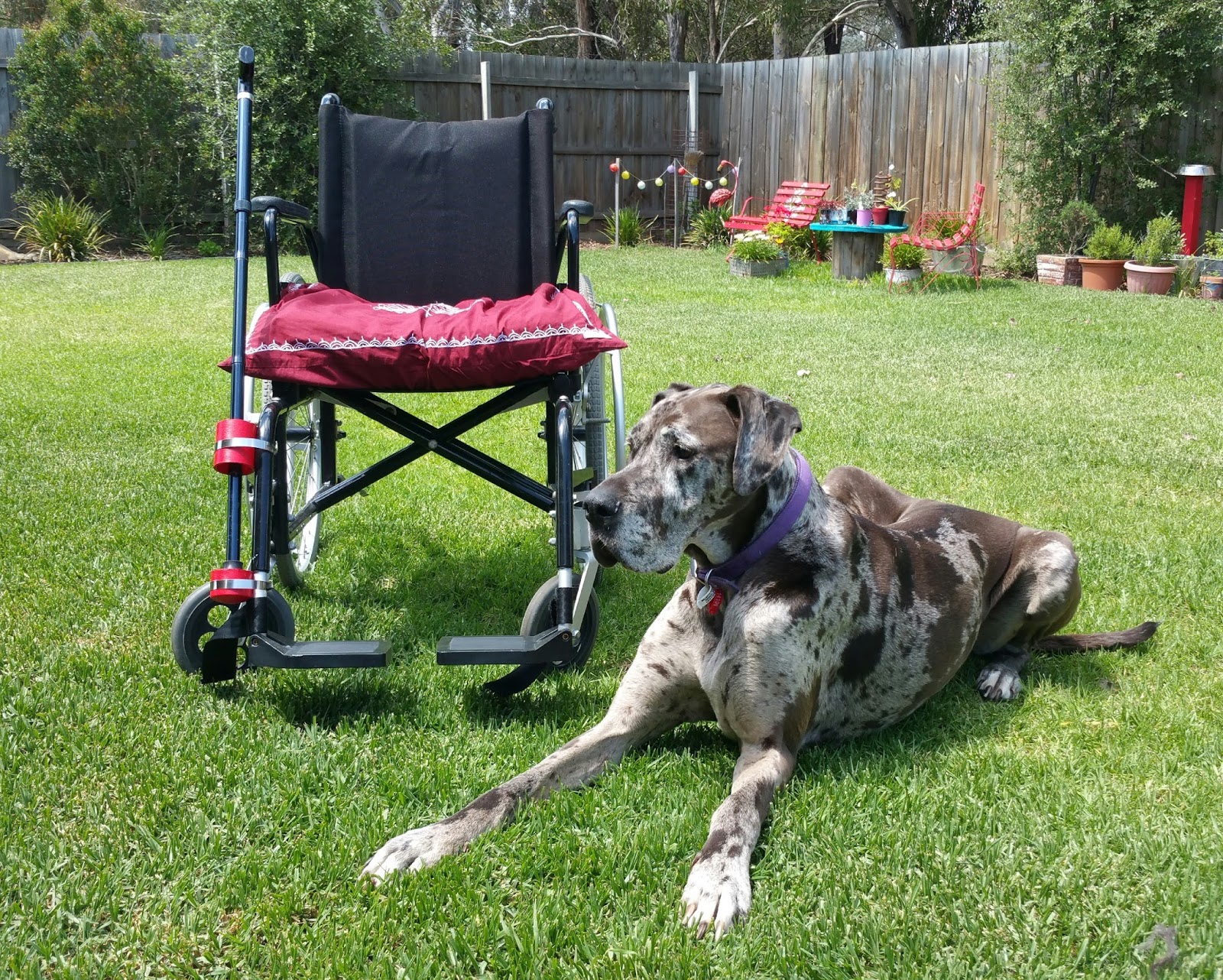
(I've loved this chair since I first saw it a year or two ago.
It belongs to Italian art director Fabrizio Sclavi. Full photos can be found here.)
I've seen a number of posts lately where fellow patients have been chastised by their doctors for using mobility aids. There is a perception amongst some, that to do so equates to patients "giving in" or "becoming" their illness. Whilst there will always be a small subset of patients who do indeed embrace their illness, these patients constitute a distinct outlier and are not reflective of the wider patient population. Instead, choosing to use a mobility aid for most, is an exercise in taking control of their situation and accessing the world. It can also require a large emotional leap, letting go of our stubbornness, and a swallowing of our pride.
On one hand I can understand the doctors' concern. Embracing the
sick role is not helpful. It impedes recovery or management and increases what is known as,
excess disability. But a large part of me wants to yell at the computer "are you serious!" Very few are the patients who truly revel in being ill. Most rally against illness, are desperate for a cure, and are driven to do anything to return to their old lives. Patient's who do otherwise are the exception, not the rule.
For the majority of patients, be they from the Dysautonomia or other chronic illness communities, to use a mobility aid, particularly in public, takes an enormous emotional wrench that is hard to articulate. Even when these devices are clearly required, taking that first step or roll can require a huge change in thinking. Acceptance is a hard road. Especially when you still cling to the hope that you'll suddenly get better and therefore not require that particular aid. Those early days can be fraught with much stress.
I've documented my own struggles coming to terms with buying and using a
walking stick, and
wheelchair, and
finally doing the paperwork for a Disabled Parking Permit. In each case it had been a case of others forcing my hand. I went through months of increasing unsteadiness, until my children looked at me one day precariously balancing/hand walking around the car to make it from the drivers seat to the passenger seat and they simply said "you
need a cane, Mum." I was walking like a drunk on a daily basis, but without their strong prompting I would never have purchased one. Same for my wheelchair. And if not for my firm but gentle OT, I would still be without my parking permit.
The use of a mobility aid when you are in your teens or 20s or 30's or really any time, is confronting. Such products are not directed at the young. My first wheelchair, Bernice, was found in the local
Aldi brochure under
Aged Care Products (as was my shower chair). There is an inherent belief that such products are the province of the elderly, when in fact that traverse all age groups. In the wider community looks and questioning quickly inform the user that their situation is abnormal. I still recall the look on one check out server's face when she asked how I'd injured my leg. Was it a sports injury? Had I been hiking? She looked confused and then aghast when I mentioned a neurological disorder. This is not the norm for a then 30-something woman. Whilst even now at 40 I frequently recoil from the looks, for a teenager, at a time when self-image and self-worth are being defined it can be incredibly difficult, no matter how helpful such a device may be.
For many their use signals that you are in fact
sick. I know for myself having my GP fill in the paperwork entitled "
Confirmation of Disability" was confronting. Not because I didn't realise that I could barely walk from my car to the house some days. Not because I didn't know that my health had deteriorated significantly. But getting that piece of paper signed made it real. I could no longer live in denial. And frankly, I was quite comfortable and happy in my denial.
For many we keep pushing on. Collapsing when out. Or simply, not even venturing out of our homes. We fight through for as long as possible, often to the point where it becomes harmful. We convince ourselves that we aren't that sick, or not sick
enough, so we don't need help with mobilising. We are stubborn and often need to be coerced to accept that a wheelchair or cane may indeed be helpful. Even long after accepting that a wheelchair is needed to venture out of the home, especially if any distance is likely to be involved, I still resent having to use one. Logical me knows it helps. Emotional me wants to run it over with a tank. Repeatedly. Luckily, logical me combined with persistent family members who give me the "you're being a dumbarse," look win out more often than not.
For many we have other competing medical issues, for example pain, which we don't mention to anyone but the doctor dealing with that particular issue. As a result one doctor may be completely unaware that walking more than 50m leaves a person in bed for days thanks to residual pain, dislocations or post-exertional malaise. For many these competing issues creep up on us bit by bit over time. For example, you can normalise the subtle increases in pain until suddenly it begins to impact on functioning, and that next small increase is the proverbial straw that broke the camels back. It is often only when all these competing disorders reach that magical combination that we start to look at mobility aides. And what can seem like a sudden and un-needed decision, is actually the result of a long process of subtle exacerbations in symptoms from competing and combined disorders.
For many their choice is accept using a mobility aid or never shop, or go to the movies, or a market, or to socialise. If walking 50m equates to passing out or pain, you are unlikely to venture out on a regular basis. If however you have wheelchair you may be able to go to the shops for a few hours or visit a market. You get to be out in the world. The benefit of having the ability to participate in the community or attend family events cannot be underestimated. Chronic illness and isolation frequently go hand in hand. Depression can often follow. That wheelchair that allows a patient to go to a family wedding can be the difference in successfully dealing with or managing disability or, becoming overwhelmed by isolation and hopelessness.
For many mobility aides are used only when out in the world. At home, in small areas, they still manage to walk as much as possible. Or they are used to help with safely navigating the house when their illness is flaring. The stubbornness that stops many from wanting one in the first place frequently means that when they step in the door walking sticks and the like are thrown against the wall and we manage as best we can without. Hardly a case of giving in, or embracing illness.
For many they still attend physiotherapy or exercise at home. Whilst they are working on increasing their fitness and strengthening their endurance, to hopefully be able to walk around aid-free, these devices help us to be mobile. To get to our appointments and to continue with life as much as possible. The idea that their use will set back a patient's improvement, negates the fact that most only use them at select times and are still committed to re-conditioning their body as much as possible. Additionally, a mobility aid may allow for access to the gym that would otherwise be inaccessible. Ie, it would allow someone to conserve their limited energy to exercise once inside.
For many it's a conscious decision of how to best spend their energy. For example, if you want to go to your child's sporting event, standing or walking a long distance may become prohibitive and you are forced to stay home. A wheelchair or cane, takes one energy task out of the list. You may be able to sit for an hour or two and watch a game, or walk from the car park the long distance to the field. But often you can't do both. The wheelchair allows us to conserve our energy and participate in our family's lives. That is priceless.
Mobility aides are just that, aides. They help us to get around. They help us to last longer when out. They take away the anxiety of passing out in public, or falling over.
They are a tool in a patients overall treatment arsenal. We use medications to control our blood pressure or pain. We use compression stockings to minimise pooling. We use shower stools to stop falling over in the shower. We use mobility aides to help us interact with the world. To get out of the home and socialise.
For most patients the choice to use a mobility aid is not an easy one. We fight the decision. Often long after their use is required. We hope that one day we can put it aside. But in the meantime, we try to learn to embrace them and celebrate the freedom they give us. To be chastised for using a mobility aid after finally getting to an emotional place where you feel comfortable to use one is a hard pill to swallow.
My message to doctors is:
Support your patient. Have a discussion. Ask why. Don't leap to conclusions. Don't expect the worst. And you may just find that the decision is well thought out, very practical, and yet another important part of their overall therapeutic program.
Cheers
Michelle :)
"Hey teacher. Leave those kids alone".