Saturday, 8 July 2017

When you know better, do better.

[Image: black typeface on pink background. Words say Do the best you can until you know better. When you know better, do better. Maya Angelou]


Saturday morning I quickly finished off a new post. The culmination of years of frustration sparked by one of those "straw that broke the camels back" moments. I pushed Publish, hopped in the car and drove to Melbourne to be on a panel as part of The Emerging Writers Festival. I caught a couple of the responses on Facebook, but didn't really look at any of my social media platforms, and no email, until today a week and a half later. My post-travel body is still drifting through the many stages of payback that accompany such trips. And my brain is still thick with exhaustion and looming migraine but I decided I could manage a short time of screen glare. Well if I closed one eye and tilted my head to the side. And could keep down coffee. Much much coffee.

Putting up a post that is a bit more confrontational does come with some predictable risks. You know that it will polarise readers. You hope that it may change some minds. Or at least sow the seeds to begin questioning the status quo. My use of YOU was designed to hit hard. It's difficult to put up the usual cognitive distance that allows a reader to deflect uncomfortable messages when each line addresses you specifically.

Some rose to the challenge. Some did not.
  • The largest number of responses gave me an internet high five. There are a lot of tired disabled people and allies for whom my words resonated. 
  • There were the predictable number of people who's responses ranged from "you hurt my feelings" to "I'm never going to help a single disabled person ever again" to "Fuck you, you ungrateful bitch." 
Then there were the group that give me the greatest warm and fuzzies, and leave me with hope for change.
  • Those who were left feeling really uncomfortable after reading my words, but wanted to know more, who wanted to do better. Who at first sat back shocked. Then processed their feelings and responded with openness. Who approached an emotional and intellectual challenge as a moment to learn. 
In many ways I feel this last group are my people. I am learning. Or perhaps I should say unlearning and learning. About disability, about ableism, about inter-sectional perspectives, about my place in the community and the world at large. I certainly don't get it right all the time. It can be uncomfortable to have that pointed out. But if you are truly open to learning, and positive change, you have to become comfortable with feeling uncomfortable. And if you consider yourself an ally to the disabled community, you have to listen to our voices even when those voices makes you feel sadness, anger or guilt.


I grew up in a very conservative household. One with little in the way of self-reflection. I pushed against it thanks to two extraordinary teachers I encountered in high school, but as kids often do, I mostly toed the party line. After moving out of home at 17 and finding a new world both complex and beautiful, I began a process of growth. One that continues to this day and will continue for the rest of my life.

A lot of that growth was painful. But challenging the safety of a very certain and concrete world view is always going to be tough.

There have been some big changes over the years. World views that are now polar opposites to those with which I was raised. In a way they were obvious and easy.

It is when you believe you are already enlightened about a certain issue, only to realise you have but scratched the surface or may, despite your best efforts, have gotten it wrong, that the real work begins. And it is work. You have to engage. To read. And read. And read. And listen to the words of those with lived experience. And uplift and promote those voices over your own. It takes time and effort. It is frustrating. And will make you recoil at points. Though the recoil is more often at the safe self-image or beliefs you have held, than the new information with which you are confronted. It's tough work. But work that must be done if you want to be a half-way decent member of what is now a global community.

Through the process you need to keep a few things at front of mind:

No one is going to give you a pat on the back for your work. 
Nor should you expect them to. 

It is not up to marginalised groups to educate you. 
It is not up to them to suppress their anger.
To be grateful
To reframe their lives to make you feel comfortable.
or 
Give you a gold star for being 
a decent human being.

This goes for all of us, including myself. For 44 years I have worked and continue to work. That's part of the human experience. The more I engaged with other people, people with life experiences outside my previous frame of reference, I had to reprocess my views. I had to listen.

In reality I did have a choice. A choice to withdraw to a safe bubble that reinforced my existing beliefs. I could choose to be selective in what I read and with who I associated. That's the easy and comfortable path. A path many take. But a path I chose to reject.

It was uncomfortable at times. There was a level of guilt that threatened to overwhelm. How could I have thought that way? Why did no one tell me there was another way? It is challenging to think you know how the world works, and then find there are a billion other worlds you had no idea even existed. And, that your view is kind of shit.

I type here realising how far removed I am from my childhood and how thankful I am for the often painful change it has taken to get to this moment in time. I know my education is far from complete and many more uncomfortable times remain in front of me. I know I need to centralise and prioritise the voices of those with lived experience from a wide range of communities, many of whom I am yet to meet. I need to listen. Really listen. To sit aside my beliefs, examine my privilege, and take on board new information when it arises. If I find there's another way to move through the world, a better, kinder and fairer way I have to incorporate that into my world.

As the saying goes,

"When you know better, do better."

And the next time you know better, do better once again.

And the next time, and the next....


And so we come back to disability. The way society reacts to disability and when disabled people speak, continues to be quite shit. And that needs to change. I am a product of that societal discourse. And trying to reconcile myself, illness and disability has been incredibly tough because of the pity/tragedy/overcoming/bad vs good, disabled person narrative and the way we internalise those negative messages as truth.

The Social Model of Disability: The social model sees  ‘disability’ is the result of the interaction between people living with impairments and an environment filled with physical, attitudinal, communication and social barriers. It therefore carries the implication that the physical, attitudinal, communication and social environment must change to enable people living with impairments to participate in society on an equal basis with others. A social model perspective does not deny the reality of impairment nor its impact on the individual.  However, it does challenge the physical, attitudinal, communication and social environment to accommodate impairment as an expected incident of human diversity.


I worked in health prior to becoming ill, yet I had never heard of The Social Model of Disability or terms like Ableism and Internalised Ableism or Intersectionality. Instead The Medical Model which concentrates on impairments and paternalistic views, dominated discussions. And whilst I prided myself on patient-centred practice, I realise now as a patient and disabled person, that my professional and personal ideas on the topic are very different. There are elements of life with chronic illness and disability that I would never have even considered as I did not know they existed. My good intentions fell short. Not that I knew. If I could go back now I would change my practice but it shouldn't take personal experience to create that change. I wish the push for patient and personal narratives had been as powerful at the time as it is now. Because lived experience brings a truly unique perspective that should be guiding both medical and disability narratives. That should be guiding the discussion in the media and society at large.

It was not just my work environment and tertiary education that was lacking. I also had a lifetime of messages around disability and illness threaded through my being, many of them were on speed dial in my head. Every new moment of illness, every new need for help was influenced by those lessons. And I have spent much of the last 10 years untangling them and the harm they have caused.

Ableism is the discrimination or prejudice against people who have disabilities. Ableism can take the form of ideas and assumptions, stereotypes, attitudes and practices, physical barriers in the environment, or larger scale oppression. (Source) 


As a child I was sick. Pain and fatigue, amongst other unsavoury symptoms, were a constant companion from the first day I woke up aged 12 unable to bend my inflamed and swollen hands. I internalised the messages from family, teachers, school friends and doctors that I was weak, morally and physically. I knew I didn't have a real illness, and should shut up and suck it up. Real illness and disability were easy to spot and should be treated with equal parts pity and tragedy. I didn't make the grade with my weakness. Not even worthy of negative illness and disabilities narratives, just derision and constant reference to my pathetic inability to just 'Harden up, Princess". Blame and illness went hand in hand. Even in the classroom when I was unable to take notes or participate in PE, there were no accommodations. I was informed, subtly and often overtly, that I was a pathetic inconvenience.

Internalized Abelism: A practice where disabled people internalize the ideas and prejudices of society that see disability as ‘other’, as something undesirable, as tragic and as something to be shunned if not pitied. This in turn results in the disabled person loathing themselves and their bodies. They inherently see themselves as lesser human beings....(Source)

I held onto those lessons each time illness came my way. I now have the name to describe my experience, Internalised Ableism. And there's nothing like whipping up those negative disability and illness narratives into overdrive, and spending my days and long sleepless nights, in self-flagellation. When in my early 30's my genes really kicked in, I relentlessly beat myself up with those lessons. I thrust the cruel words of my youth at myself and as much as I'm loathe to admit it, at others. Thank goodness for therapy. I'm grateful every day that I took the leap and embraced the process. But I still struggled with seeing my experience clearly. I had finally started to work through a lot of my baggage related to illness but disability was something that I couldn't connect to. Something I didn't feel I had a right to connect to. Even as my level of functioning continued to decrease and I was disabled by both my body and the world around me, I was unable to connect the dots.

Internalised Ableism is a cruel beast. One I am still taming.

And it's a burden that none of us should have to bear.

It took meeting some incredible disability advocates to point me towards a different way of looking at both disability and illness. And in turn myself.

I read their words. I availed myself of the wealth of information available on the internet. I read and I listen. Again and again and again. I did, and continue to do the work. I still don't get it all right and I still struggle with certain concepts, but I don't turn away. We are a diverse group, with diverse experiences and beliefs. And it's a lot to process. Ideas around Intersectionality have also come to the fore in recent years. It's a lot to unpack and learn, but again I read and I listen. Because I want to be my own ally, and an ally to others in the community.

Intersectionality is a concept often used in critical theories to describe the ways in which oppressive institutions (racism, sexism, homophobia, transphobia, ableism, xenophobia, classism, etc.) are interconnected and cannot be examined separately from one another. The concept first came from legal scholar Kimberlé Crenshaw in 1989 and is largely used in critical theories....(Source)

There are amazing disabled people whose voices I needed to hear. They challenged me (continue to challenge me). So often there'd be an element of what they said that in challenging, also articulated my experience in ways that I had never been able to express before. In ways that made my experience make sense. And that has been a gift. A gift I want for others. For those who want to be allies and for those who are part of, or will be part of, the disability community.

I am a proud disabled woman today thanks to those who have shared their words and their experience. 

Disability advocates are writing about their experience, attending conferences, and providing education services. Online communities abound as do personal blogs. If you consider yourself an ally you need to engage. The information is there waiting for you to access. Don't wait for or expect us to educate you. You are but one in a relentless wave of questioners and the emotional labour demanded is exhausting.


I choose to challenge and learn for myself, for my children, for all those who still struggling. I choose to challenge and learn for myself that all our efforts combined can one day change the narrative around disability. That others will one day not experience the same harm. I choose to share my voice, my angry and frustrated words, that others may also feel confident to raise their voice and also share their experience.

And I don't apologise for sharing those words. For sharing my truth.

I understand what it's like to have your views challenged. To have to acknowledge your privilege. To feel the first uncomfortable creep. It feels very personal and challenging. I've been there. We all have.

But that is the point where you can choose to listen and learn, or choose to turn away.


That's on you, not me.


Michelle

Saturday, 17 June 2017

YOU.

[Image: a woman in a wheelchair sits in front of a grey shed door in the bright sun. Her hair dress and stockings are all pink her shoes silver.]


I am a disabled woman.

I am a disabled woman.

I AM A DISABLED WOMAN.


And

I am disabled by you.


Yes, you.

You there.

You who's looking shocked.

You who thinks, oh she can't mean me?

You who is starting to feel the slow creep of discomfort and defensiveness.


You who see inspiration and bravery before I act or speak a word.

You who feel the sharp pang of pity when I cross your line of sight.

You who pat me, or tell me in a Play School voice that I'm "doing so good!'

You who think, she doesn't look disabled. She doesn't sound disabled. She doesn't act disabled.

You who uses words like overcome and despite when referencing my disability.

You who see me and think, if only she could be fixed.

You who's first question is "so what's wrong with you?" or "what did you do to yourself?"

You who shares Inspiration Porn and simply can't see the problem. "But it is inspiring! Just look."


You who insist that I'm not a disabled woman, I'm a woman with a disability. And insist. And insist. And insist.

You who tell me that disability is a dirty word.

You who tell me I am a person, not my disability.

You who delight in your own perceived enlightenment, because you don't see my disability.

You who uses words like handicapable, (dis)ability, differently-abled.


Just say the fucking word.


You who cheer our paralympians, but baulk at forcing businesses to comply with even the most basic accessibility standards.

You who support accommodating disabled people, until it inconveniences you.

You who book events in inaccessible buildings.

You who create businesses with heavy doors, steps, no accessible change rooms and aisles too small or too cluttered.

You who work in them and say nothing.

You who see a ramp and think that access is sorted.

You who gets offended and angry when your failure is explained.

You who never considered accessibility in the first place.

You who say, why don't you just ring and check?

You who cannot understand how exhausting it is to ALWAYS have to ring ahead to check. And that a yes is no guarantee.

You who think, well disabled people never attend anyway.

You who cannot conceive that the constant lack of accessible venues becomes a self-fulfilling prophecy.


You who think it'll never happen to you.

You are too virtuous, health conscious, perfect, to ever become disabled.

You who knows and are, better.

You who uses the R word or it's derivatives.

You who tell me why it's not offensive, because it doesn't mean the same thing anymore.

You who instantly begin making excuses or explanations for perpetrators when I share my stories of Ableism. "But they had good intentions." "But he really means well." "But what about their feelings?" "Let me play devil's advocate for a second."

You who don't believe Ableism exists.

You who still don't know what Ableism is.


You who say, I wouldn't give in and use a mobility aid.

You who say, oh but I don't mean you. I'm not talking about you. It's okay for you to use one.

You who use terms like "wheelchair-bound" and "confined to a wheelchair".

You who feel defensive when I become angry at their use.

You who ask if I need help, then ignore me when I say "No thanks, I'm fine".

You who feel entitled to put your hands on me, on my wheelchair, without even the most basic of common courtesy to ask.

You who feel entitled to ask my medical history.

You who come up with such unique and witty lines as "that chair could take you to Mars", "Do you have a licence for that?" "The two of you should have a race."


You who think you are a great ally.

You who speak of diversity and privilege, but repeatedly fail to include disability in the list of marginalised groups.

You who speak of embracing your body. embracing your beauty. But fail to include disabled people in your narrative.

You who talks about embracing difference, when what you mean are the differences you find palatable. Not disability.

You who rally against violence, unemployment, homelessness and restrictive reproductive rights but never acknowledge that disabled people are frequently over represented in the statistics. That disabled people who also inhabit other marginalised groups are even more at risk.

You who discount lived experience. What would I know?

You who think your able-perspective can explain my life better, write my life better.

You who think your right trumps mine.

You who believes that in re-centering the narrative around the disabled voice, you are missing out.

You who speak of diversity but only on your terms.

You who think you know better.

You who think we should be grateful.


You who think I'm some sort of inspirational saint for simply living my life.

You who instead expect me to devolve into a puddle of weeping flesh because disability came my way.

You who think you're a superhero for your vigilante policing of accessible parking spaces.

You who shout FAKER and refuse to believe the permit sitting on the dash.

You who still can't understand that invisible disabilities exist.

You who knows most of them are bludgers, fakers, rorters, leaners.

You who tell me I'm "lucky that he's stuck around."

You who think I am so burdensome that I should not expect anyone to want to stay, or, to love me.

You who reads a story about the murder of a disabled child by a parent, a disabled wife by her husband, and think "Understandable" "Justifiable" "Act of Mercy" "Act of Love."


You who think I am pretty, articulate, confident,


FOR A DISABLED WOMAN.


I am disabled by your attitudes.

By your infantilisation.

By your low expectations.

By your erasure, wilful or unintentional.

I am disabled by you.


By you.


By you.


By you.


I AM A DISABLED WOMAN.

A proud disabled woman. 

An amazing disabled woman.


I AM A DISABLED WOMAN.


Michelle


Update: I wrote a post in response to some of the messages I received about this piece When you know better, do better.

Wednesday, 14 June 2017

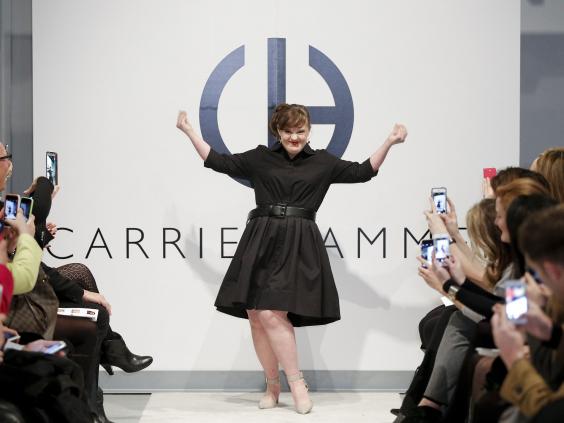
Yet again I am reminded that the Australian Fashion Industry does not see me.

(Elle Hungary featured amputee Reka Lukoviczki (aka Robot Girl) on their Love Your Body cover).


This morning I awoke to see a video of a fashion parade in Ethiopia featuring disabled people. The project created by the Ethiopian Fashion Designers Association included designs by 15 different fashion designers. The clothes were fashionable and stylish. During the accompanying package of the the designers, Tseday KebeDe, spoke about the need to design for disabled bodies. And importantly,
that fashion is for everyone. 

My usual morning scroll through Instagram showed the stunning Jillian Mercardo gracing another magazine cover (below). This time photography magazine, Glassbook  In demand, this US disabled model has graced multiple magazines, and been involved in multiple campaigns, including  Beyonce's Formation campaign.


A few posts down and the beautiful Leopoldine Huyghues Despointes is featured in the pages of Harper's Bazaar Mexico wearing Dior. The talented French actress, artist, activist and model, is regularly seen in fashion campaigns.


A quick look around and the trend of including more disabled models in fashion campaigns overseas continues.

Model Alexandra Kutas made her debut at Ukraine Fashion Week in 2015. She continues to has grace runways is gorgeous designer gowns. 


(Alexandra Kutas. Photo Credit Andrey Sarymsakov, from his Break Their Chains project)

Lebohang Monyatsi  (aka The Rolling Goddess) is gracing runways and photo shoots in her native South Africa.

(Lebohang Monyatsi; Maboneng Fashion Week 2016)

Latvian-born, British model, singer, song-writer, DJ and Bionic Pop Artist Viktoria Modesta embraces avant garde. She has graced many a fashion magazine and fashion show and is an ambassador for bespoke prosthetics company The Alternative Limb Company.

(Image: Viktoria Modesta wearing the Spike Leg, created by Sophie de Olivera Brata and Kaos Art, Fitted at Ability Matters Clinic, Photographed by Ewelina Stechnij and Lukasz Suchorab.)

Haitian- American blogger Mamacaxx describes herself as "Survivor, Blogger and  Role Model". She is also an Alleles Ambassador (Alleles manufacture stylish covers for prosthetics.). Her Instagram is a stunning fashion journey. She has featured in multiple magazines and continues to dismantle preconceived ideas around what disabled should be and should look like.


The fabulous American model Melanie Gaydos has featured in multiple campaigns. In particular high end and experimental fashion.

A post shared by Melanie Gaydos (@melaniegaydos) on

US based artist and model Caitin Stickels aka Caitin kitten is yet another disabled model demonstrating the beauty of difference. Her V Magazine shoot is simply stunning.


American actress and model Jamie Brewer (love her in American Horror Story) has walked in New York Fashion Week and been featured in various inclusive fashion campaigns.


These are but a handful of the disabled models working around the world. Featuring in magazines and on runways.

Australia does have disabled models.

Madeline Stuart has walked in New York Fashion Week amongst others and has featured in numerous magazines, and now has her own clothing line, 21 Reasons Why.


The lovely Angel Dixon recently featured in Target's new campaign and has walked overseas for brands such Bezgraniz Couture.


Last year model and athlete, the gorgeous Robyn Lambird (I have serious hair envy) also appeared in a Target campaign.

A post shared by Robyn The Trex Lambird (@robynlambird) on


Yet here in Australia I am yet to pick up a magazine, other than a Target catalogue, and see a disabled model. I can flip through everything from Australian Women's Weekly to Vogue and no where do disabled models appear. (Update: Turia Pitt is currently on the cover of Australian Women's Weekly as the featured interview. Whilst not modelling per se, her position on the front of a such an iconic and well-known magazine is still incredibly powerful given how few people with facial difference appear in, let alone on the front cover, of well-known magazines. Of note her first cover in 2014, was the biggest selling of that year.)

When brands and companies proudly announce they are embracing diversity, disability is never part of the campaign (Think Vogue's 2017 attempt at a diversity cover. Problematic for so many reasons, one of which was their continued obliviousness to disability in their diversity brainstorming. Or local company Myer in 2016 alerting us to their new enlightened direction to move beyond the overwhelming whiteness in their shows. With no mention of age, size, or, disability.)

Brands continue to pat themselves on the back for embracing different races, plus-sized models and more recently older models, (which is all fantastic) 
but disability continually fails to be included in the mix.


Which leads to the question: do disabled people simply not exist in the minds of the Australian fashion industry?

I am a disabled 44-year-old woman who loves fashion. I use a walking stick and a wheelchair. I wear compression stockings. I dress up nearly every day. I celebrate self-expression through fashion. And I want to see myself and other disabled people represented on the catwalk and in the pages of multiple magazines. I want to know that the Australian fashion industry sees me, embraces me and values my existence. While I did love seeing Angel Dixon in the Target campaign recently, I am acutely aware how rare this experience is. With adults with disabilities largely forgotten by the industry.

I am not alone in my frustration. It is one shared by many other disabled people in Australia. Many of us, myself included, have not been happy to accept the status quo, instead creating our own fashion world on platforms such as Instagram (was rather excited to be part of this article by Revelist). We share our fashion expression and tips for dressing with style when using various mobility aides. We share knowledge of brands embracing disability (eg Target, Nordstrum, FTL Moda) or creating specifically with disability in mind (eg Bezgraniz Couture, Sue, Vanilla Blush). We note those companies who see our adaptive needs as a means to express ourselves (eg Alleles, Adaptive Limb Company, LympheDivas, Top and Derby, IzzyWheels).  In the process our presence is actively challenging societal perceptions of what disability looks like and how we live our lives.

Disabled people are actively engaging in fashion. 
Why isn't the industry here in Australia engaging with us? 

The vast majority of fashion brands including, or actively making clothing for disabled people are still located overseas (with current dollar conversion rates and postage, frequently making them inaccessible to Australian residents).

When will we see the same push for the inclusion and valuing of disabled people by the fashion industry here in Australia? We are continuing to lag behind the rest of the world when it comes to disabled models on the runway and in fashion magazines. Target and Kmart are still two of the few companies here in Australia including disabled models in their advertising, especially when it comes to adult fashion.

Organisations such as Startling with Julius are actively advocating for the inclusion of disabled people in advertising. Thanks to their hard work there has been a slow but perceptible increase in the inclusion of disabled children in campaigns. However adult representation apart from the aforementioned campaigns, remains sorely lacking.

It's not good enough.

In Australia 1 in 5 people are living with some form of disability (roughly 4,756,000 people). Why aren't we represented in advertising, in magazines or on the catwalk? Overseas numerous fashion weeks and magazines are including disabled models. From Russia to Ethiopia, South Africa to Mexico, Japan, the USA, Hungary, the Ukraine, the UK, the Netherlands, the list goes on, all have included disabled models. If they can see the value of inclusion and embrace the beauty of difference why don't we?

I ask the Australian fashion industry once again,

"Why don't you see me?"

Michelle

Musical accompaniment had to be the amazing Viktoria Modesta with Prototype.

Friday, 9 June 2017

Of imaginary Fjalkinge storage units and Eket cabinet combinations.

[Image: A large Great Dane by the name of Freyja excited jumps on me while I try to take a photo. I am foolishly sitting on the grass in the backyard which is prime pummelling position according to Freyja. Only my pasty legs, top of my pink head and a red rose hair clip are visible above her merle back and rear end. In the background in a red chair and a blue topped wooden cable spool (on the left) turned on it's side for a table. A folded red umbrella protrudes from the top of the table and a collection of plant pots are on the top of the table. In the background is a grey wooden fence trees and more pot plants. Variations of this scene populates most of my #upanddressed photo attempts.]


Sometimes I manage to convince myself that I've got all my shit in a pile. I look around the room and studiously avoid the spots where my shit lies in tangled heaps. Strung from picture hooks and curtain rails. I place my hands over my eyes where I can't avoid the pieces dangling from the light fixture like sneakers hanging from overhead power lines. I ignore it's shattered remnants that lie down the hallway and across the kitchen bench, leading to a haphazard selection of stepping stones trailing out the back door and into the backyard. I zig zag around the pieces and find the spot in the yard where I can fix my eyes on the back fence where no piece of the shit shamozzle hangs.

I sit on the ground and ignore the pieces that jut into my crossed legs and breathe in the illusion of control and organisation. Stare straight ahead. Eyes fixed on the whorl in the grey weather-beaten paling. Trace the lines that never quite connect. Separate dark grey from light. Ignore the piece of spider web that covers the edge. It's all about perspective. Crop the picture in my minds eye. Vignette and Tilt Shift my new best friends.

Ignore the internal shaking that heralds the fall. Ignore the greying vision that sweeps in and out. Unless of course they add to the filter. Inkwell or Willow? Remove the colour, as the colour drains from my face once more.

Exhaustion probably isn't the best lens to look through.

To act through.

I look back at the last few weeks and try to pin point the cause. Is it the new med? I've been slowly titrating my dose. But the side-effects have been creeping up the closer I get to my goal dose. First a whisper and then a scream. I can no longer ignore them or stuff them away. Is it the pain? It's been far worse of late. With the added joys of tweaking my back and screwing my neck in the middle of a cat-cow yoga move that weeks later still hasn't fully let up. Is it the gastric issues? Everything is hurting of late. And nothing is coming out. I dread eating but force myself to fuel the machine. Is it the vertigo that has started with the neck injury? Not shocking but enough that movements feel slow and deliberate all the time. Is it the blood pressure that has been more labile than usual. The overall malaise that suffuses my being. All of it is present and at different times each forces it's way through the crowd to demand the most attention. A constant barrage of complaints with each demanding it's moment in the spotlight, but it's duets and chorus all the way.

And my shit falls from my arms as I try to carry it all. I tell myself I've got it but in reality I haven't. My body is fickle. This disorder, this illness, the genetic shitfight that weaves it's magic through viscera and bone, demands my undivided attention. A toddler screaming in the ailse at Woolies, it wants what it wants and it wants it now. It'll wear me down until I acquiesce.

No matter what I tell myself.

But still I cling to the fallacy.

A selection of Ikea storage solutions dot the rooms of my imagination. My shit is neatly stored in a series of Fjalkinge storage units and Eket cabinet combinations. My floors and walls unmarred by their strewn presence. And all is well with my little world of denial.

I pop on a dress and pretend that an hour out wont set me back further. I recline the chair in the car and drive to the next town to do a spin around Kmart and the purchase of some unnecessary accessories. Sending me to bed to drool comatosed on my pillow for hours.

I take a snap shot and add the filter. I crop and blur. I'll live my life in pieces that'll never meet up.

Because my shit is in it's neat little pile. Can't you see?

Well except for all the times that it isn't.

Michelle

Listening to a lot of PJ Harvey of late. Playing it loud and singing badly. Apologies to my neighbours.

Thursday, 30 March 2017

Metamorphosis: Marketing Medical Compression as Fashionable and Transforming the Narrative around Disability and Illness.

[Image: Nine photos 3x3 showing me wearing a variety of colourful compression stockings in a variety locations. The photos are all from the last year and reflect my changing hair colour from green to purple to pink. I am seated, in my wheelchair and standing with my walking stick.]

Note: The Juzo, Mediven, and Sue websites I've linked are not in English. Each page should give you a translation option, otherwise there is a translation icon that should pop up in the right side of the URL bar.


*****


Recently, the promotional video for the new season trend colours, was released by the German arm of compressionwear company, Juzo.


I sat watching with a huge grin on my face. Not only were the colours fabulous (Happy Red is a personal favourite), but the promotional video and the behind the scenes short film both framed medical grade compression in an energised, stylish, more inclusive and fashionable manner, not unlike what you would see for any fashion brand. A rarity in a market that sees clinical practicality as it's primary driving force.

This is not the first time I have been struck by Juzo's attempt to merge fashion into the medical grade compression world. In 2015 they released a similar video for their Urban Jungle range (below is the behind the scenes video for the range).


(The 2015 campaign sent me in search of their products. And the bright Kings Cross Yellow in particular became a favourite that I frequently wear.)


Both videos have moved medical grade compression stockings from the clinical, sterile, medical domain to a fun, stylish and normalised aspect of life. There is also a move away from a product primarily aimed at an elderly market (mind you 43 or 73 I want a bit of wow in my compression stockings) or a practical work component (eg nurses often wear compression stockings as they are on their feet all day).

Juzo are not the only company to actively seek to reposition their compression stockings away from a purely medical product to a fashionable product. Mediven showcased their Elegance range at Berlin Fashion Week 2016 (read more here). I love their write up and the photos showing how integrating medical grade compression and stylish fashion can be effortless and looks fantastic.


Both the Juzo and Mediven campaigns are exciting. They mark a distinct move in the market: where fashion has become an important part of design. This is a move that those of us who purchase these products have been seeking for a long time. It also represents a realisation that real people are wearing their products and that fashion matters to those wearers. This is a distinct move from a traditional medical products market that has historically designed for, and targeted, large organisations who's purchasing guidelines are based on practicality and fiscal responsibility.

The disability and illness communities have their own purchasing powers and no longer rely exclusively on organisations to provide them with products such as these. The proliferation of online shopping means that we are no longer beholden to the dictates of the medical system where we are told what is on offer and what we will receive. In a sense the middle man is removed from the equation and some companies are recognising that they need to market to the individual user. Though cost continues to be a limiting factor for many on low incomes and for those of us living in the Southern Hemisphere where postage and a poor $AU can create an added level of financial burden. Options to decrease costs and source sales are available but it can be time consuming.

They also change the narrative around a product that is often associated with a negative representation of increasing age or illness. A necessary evil that many must purchase, but hate due to the illness they represent, and a previous lack of attention to their aesthetic value that firmly places them into a hospital or medical model.

In reality, compression stockings increase functionality. As a long term user for me they represent an increase in endurance and a reduction in pain and swelling. They help to reduce my symptoms and in so allow me to do more. They add to my overall level of functioning and in turn aid me in getting the most out of life. And with these new ranges they can also be integrated into my personal style. A win on many levels.

Out the front of our local where we tend to always go for date night. You can see the stockings better in this one. They are @sigvaris (although @Jobst) do a similar pair). It can be hard to style #compressionstockings in Summer or it you're going out but it is possible. I wear them with shorts and dresses all the time. I don't pretend to have any fashion styling prowess, I simply wear what works for me, but if you are confident and forget they are a medical product it is possible. Especially with all the fashion options avaliable these days (check out my blog for links and reviews). * * I also take inspiration from fashion bloggers I love like @ladymelbourne who made me really think about personal style and confidence to take a chance and embrace what I really love. Or wheelchair and diasbled fashionistas like @itslololove and @cur8able (the idea of lengthening limbs when sitting by simple tricks like pushing up sleeves on a jacket are gold). And I broke out my high heels again in part thanks to @angelarockwood_official. There are so many amazing disabled and chronically ill fashionistas to take inspiration from. And it is possible to tweak current looks to be disabled friendly with a little thinking outside the box. * * I really wish we could see a more visible disabled presence on runways here in Australia. I wish we could see disabled fashion presented like you would any other (@IZadaptive did a great campaign this year but are sadly closing). The importance of that visible presence can't be underestimated for disabled and able-bodied alike. * * Fashion is for everyone and should be accessible for everyone. Across a whole host of styles for people who like fashion as a medium of self expression (gosh I love @viktoriamodesta avant-garde looks) or simply want to frock up on occasion. We aren't a niche. We are consumers with cash who want to wear fashionable clothes. #dysautonomia #chronicillness #disability #fashion #frockingup #fashionblogger #ootd #wiwt #everydaystyle #40plusstyle #wheelchair #wheelchairstyle #wheelchairfashion #disabledfashion #disabledstyle #streetstyle #ruraldisability #ruralstyle #ruralfashion #Australia #gippsland #upanddressed
A post shared by Michelle Roger (@michelle_roger) on

Fashion can increase usage rates.

Like many Dysautonomia patients I wear medical grade compression stockings every day. Prior to any pharmacological intervention they form an important component of first line treatment, alongside increased salt intake, increased fluids and a graded exercise program. We know that peripheral vascular flow is frequently impaired, as seen with visible blood pooling and swelling in lower limbs, and that this is part of a systemic process that contributes to many of the symptoms patients experience.*  However, the implementation and continuation of this management technique is often low.

Compression stockings are notoriously difficult to don and remove even with the various techniques and devices offered. They are also hot, a significant problem when you have a disorder in which thermoregulatory control is often impaired.


But by far the biggest complaint regarding medical grade compression stockings is related to how they look. 


Despite doctors frequently prescribing compression stockings to treat issues such as poor venous return or oedema there continues to be a lack of knowledge about fashionable options. Patients may be given a pair of  white TED stockings during a hospital stay, or head to their local chemist and find information about black, white, beige and perhaps navy. But any discussion of fashion tends to be confined to lamenting it's lack in the compressionwear market.


I have been writing about my search for fashionable compression stockings since 2012. At that time I was stuck in the compression purgatory that many patients face. I was given a scribbled prescription from my cardiologist with little to no information. I was to seek out a pair of 20-30mmHg waist high compression stockings. There was no information on brands or where I could source them beyond a vague "ask at the chemist." At my chemist I was met with confusion. Why would a then 33-year-old woman be asking about compression stockings? Were they for my grandmother?  I was shown a catalogue of limited styles and ended up with two pairs of very uncomfortable waist high, very practical, black compression stockings. It was a step up from the beige I had been offered originally but depressing all the same. Then in 2012 I found my first pair of coloured compression stockings and a new world opened up.

Since that time I have shared every fashionable option I have found with readers here on the blog, in support groups and on Instagram. It is like a new world opened up. Whilst always a practical medical item at their core, it became apparent that they could be matched to personal style. No longer were they something to be worn with spite and loathing. Instead there was a transformation and a normalisation of a medical product. A way to take back some control of my life from the relentless medical need. And I like many others wore their stockings with increased regularity and in turn increased functioning. (I feel a little like I should we lived happily ever after at this point!)

Where is the Disability Representation?

The Juzo video features a range of models, including a variety of body types, ages and sexes (although, unlike their 2015 campaign, only white models are used in 2017). I applaud their move towards diversity, something rarely found in the compression stocking advertising, however disability again is missing from the mix. This seems a surprising omission in what is at it's core a medical product. A quick scan of social media platforms such as Instagram, reveal a large population of disabled fashion lovers. The incredible work of Alleles prosthetic covers, the beautiful bespoke pieces created by The Alternative Limb Project, the increase in accessible fashion brands such as Bezgraniz Couture or Sue flourish thanks to a huge fashion loving disabled market seeking more fashionable options.

Disability representation for a product like medical compression should be part of any advertising campaign. And while the overall feel of this new wave of campaigns is very positive the neglect of a key group in the market is disappointing. I am cognisant that some of the models in these campaigns may have an invisible disability, I know prior to my need for mobility aides I looked very healthy despite my underlying medical issues, but the importance of visibly disabled models in campaigns such as these cannot be underestimated. Visibility changes how society feels about disability. Visibility changes how we feel about ourselves. I both love these campaigns and fully embrace the change in narrative surrounding a product with what could only be described as a PR problem, but I am disappointed that a disabled model is not part of the mix.

Advertising is often framed in terms of aspiration, in the case of the Juzo and Mediven videos a fun, stylish and energised life. Surely we as one of the largest user groups of these products, we should be included in this aspirational narrative. I know that many disabled fashionistas are living fun, stylish and energised lives, our inclusion seems obvious. While at a grass roots level we are gaining momentum in changing how we are viewed by choosing how we are representing ourselves, it would be nice for brands to come on board and follow our lead.


Where to from here?

Companies such as Juzo and Mediven are slowly changing the narrative around compression stockings. However, awareness and availability of fashionable compression stockings desperately needs to increase.

Even with fashionable products available in the market, their lack of visibility and availability, means that the more traditional and basic options continue to dominate and tend to be the only styles offered to new patients. We are stuck in a self-fulfilling prophecy where by patients don't request fashionable items because they don't know they exist and the gate keepers of these products don't stock them. And the gate keepers say that they don't stock them because no one is requesting them.

Whilst, medical professionals continue to prescribe compression stockings for a range of issues they are rarely aware of fashionable options and they have no idea that they can be integrated into our personal styles.

It is clear that a wider advertising campaign needs to occur. At present, information about fashionable options are shared patient to patient, on blogs such as this or other forms of social media such as Instagram, or on forums. This informal advertising whilst fabulous, is still haphazard and reliant on luck and at least one patient who spends her nights working her way through Google looking for new fashionable options and tries her hand at styling them. I'd love to see compression brands on more runways and in mainstream fashion advertising. Or taking tips from sporting compression companies such as Skins or 2XU who have moved from elite sporting environment to become household names and found in gyms and sporting fields all around the world.

And I would love to see disabled models featured in their campaigns. 

Like many in my position I spend enough time in the medical system and I have no desire to wear a piece of cold, clinical hospital every day.

What I do want is something that meets my practical needs but can also be incorporated into my personal style. I am happy to flaunt my bright yellow, or red, or green, or blue, or patterned legs all year round. To wear them with shorts or dresses. To get on with this business of living knowing that I can be both practical and fabulous.

Reframing a traditional medical product in the new wave of campaigns helps to change how we think about those that wear them. It helps to change how we feel about ourselves. So much of my life and the lives of those around me are dominated by medical needs. Reframing how we think about and relate to items like compression stockings helps to remove stigma and improves how users feel about themselves. Incorporating fashion into practical medical products is a simple way to change these attitudes. And a definite selling point.

Fashion, medical practicality and disability can coexist. Time for more companies to come on board.

Michelle

*There is also evidence of abdominal blood pooling, in particular in Neurocardiogenic Syncope (NCS), and abdominal binders/compression are now often recommended alongside waist high compression stockings.

Some more resources here on the blog:

Compression Stockings: From Beige to Brilliant 

Fashionable Compression Stockings 2016 Update: Options and Tips.

Rejuvahealth Review.


Allegro, Microfibre 20-30mmHg Black Thigh High Compression Stocking Review

LympheDiva Gauntlet Review.


Fashion blogging is not for the faint of heart

Goldfrapp's Happiness seems an appropriate musical accompaniment as fashionable compression stockings makes me very happy.


Wednesday, 15 March 2017

Yes, Disabled People Wear Lingerie.

[Image: black and white photo of a walkingstick in a window with a bra handing from the handle. And because it didn't occur to me to dust, there is a scattering of dead black insects and some cobwebs on the white windowsill.]

Last year I rolled into a lingerie store to check out a rather fabulous emerald green bra and undie set that had caught my eye in their display window. I rolled around the tightly packed store grazing racks of g-strings and t-shirt bras until the inevitable happened. On the back of Lucille (my electric wheelchair) are a set of handles that allow another person to push the chair if I run out of batteries or become too incapacitated to manage my joystick. I forget they exist 99% of the time. They are behind me and I am highly unobservant even on my good days. The 1% of times are times like that day when, dazzled by the wall of lace and satin, I had deviated 1° off my safe path and caught a rack of lace teddies on a handle. I promptly pulled the entire rack of teddies to the floor. I stopped mortified as the loud clatter of plastic hangers dwindled into silence. Looked back to find a pile of plastic and lace on the floor and a single sad white teddy hanging haphazardly off one of my handles. I waited for assistance.

And waited.
And waited.

The attendant didn't even look at me and I was faced with a set of tight, black clad shoulders that either belonged to the ghost of a past store attendant, or, she clearly had no intention of turning around. Embarrassed and leaning precariously from my chair, I tried to pick up the pile. When it became clear my attempts were going to end in a possible worsening situation, that of an uncoordinated disabled woman plummeting from her chair to take out an even larger display of lace and satin, I leaned back. I twisted. Grabbed the lone teddy from my handle. Hung it back up on the chrome display pole. And rolled out. When I looked back the attendant was clearly relieved I was gone.

At no point from when I rolled in to when I left did she make eye-contact. She saw me enter, turned her back and continued to speak to the only other woman in the store. I felt like I was back in high school when the cool girls would deliberately ignore my decidedly uncool self. The classic exclusionary tactic employed by teenage girls throughout history: turn your back and continue to talk like the uncool girl never entered the room and doesn't even exist.

It was clear that I was not welcome. 
A disabled woman in a lingerie store? 
No thanks.
Too difficult.
Too ick.
Too "why would a disabled woman even want lingerie?"

I know I'm not alone in this experience and have had multiple conversations with  disabled friends who have felt excluded or discriminated in lingerie stores. People have difficulty with the concept of disability, and in turn interacting with disabled people. But the combination of disability and sexuality makes people profoundly uncomfortable. However that sexuality is expressed, from purchasing lingerie to dating, exploring sexual identities, or participation in different lifestyles, it quickly becomes clear that society doesn't want that connection to exist. (There was a massive blow up on a popular disability site a few years ago when a sex positive story about a disabled adult attending a completely legal sex party in Canada was published. The gentleman in question found it a celebratory, inclusive and empowering event. Responses were clearly split between those who did and didn't have lived experience of disability. Disabled commenters were predominantly happy for him. However, many parents of disabled children, carers, and adults without lived experience of disability were horrified even threatening to report the event and the group to authorities. Similar responses also occur when there is mention of the use of sex workers to aid disabled people in exploring their sexuality.)

Disabled people are seen as asexual by many. Or undesirable. Or as frequently comes up in comment boards when disability and sexuality are discussed, special snowflakes, or forever children who should not be sullied by icky notions like sexuality. Many simply go straight for the "how could a disabled person possibly consent to sex or any expression of sexuality?" That there are different types of disability, that we could consent, or be taught about bodily autonomy, choice or safe sex practices doesn't even enter the public conscience. That sex is a part of the human condition and should be considered a human right for non-disabled and disabled people alike is rarely discussed. We are not supposed to be confident or feel attractive. We are not supposed to own our own experience. We are to inhabit the realms of pity or inspiration and never dare to mention that our wants and needs are strikingly similar to those who are not disabled. And the idea that we might simply want to wear some hot lingerie that makes us feel confident, for ourselves, not anyone else, isn't even in consideration. The woman in the lingerie store let me know that I wasn't welcome. And she definitely didn't see me as a potential customer.

Pfft to you rude woman! I'll spend my dollars elsewhere.

Yesterday, NZ company Lonely Lingerie's new campaign came to light. It stars 57-year-old Mercy Brewer. The photographs show a confident older woman wearing some fabulous sexy lingerie. Stylistically the photographs and the lingerie are no different to what you'd see in a campaign with a younger model. This is not the conservative, stodgy, lingerie we are routinely shown in advertising directed at older women. It is unashamedly sexy. And it is fabulous. It defies so much of the narrative around older women. Women in Mercy's demographic tend to be framed as mothers or grandmothers, and advertising and society tells us there is only one acceptable form of mother/grandmother. I can't help think of Madonna wearing a revealing outfit at the Met Gala last year which was met with cries reminiscent of Maude Flanders "won't somebody please think of the children!" As if motherhood or grandmotherhood, or age, (or disability) automatically wipe away a woman's sexuality and self-expression. As a purple-haired, side-shaved, mini-wearing, 43-year-old, disabled woman and mum of two son's, I call BS on that.


[Image: An older woman leans against a wallpapered wall wearing a black bra. The entire photo is in sepia tones. Text below says "Aging can bring a quiet confidence unknown in youth, what use is beauty without confidence to recognize yourself?" -Mercy Brewer #LonelyLingerie]


I read a piece discussing the Lonely Lingerie campaign that stated that age was the final frontier of lingerie advertising. I would have to disagree and say that disability continues to be the final frontier as we so hard pressed to find any disabled women, or men, in lingerie campaigns. And an older disabled woman? I swear I belong to a group of mythical women dwelling in a land that time and advertisers forgot. I met a woman just like me at a concert recently. She had no idea that other older, less conventional, disabled women in wheelchairs existed. We bonded on shared experience and anger that we are never represented in advertising, or media, or life.

While the lack of disabled women in advertising is clear, it is equally apparent that even the concept of such a thing as diverse women's bodies remains controversial (that mythical land of diverse women is pretty bloody full! And only a few hardy adventurers/advertises seem willing to go searching for those far lands.). There is a particular part of society that is vehemently opposed to diverse women who are comfortable and confident living in a body that much of society and the majority of advertising would prefer be hidden away. Add in any hint of sexuality for those who have a different body type from the dominant advertising norm, and people become even more uncomfortable and frequently vicious.

Today I watched as US company Livi Rae Lingerie's was told that their images of diverse body types, including a disabled woman in a wheelchair were in "poor taste" and should be removed. The images show confident women speaking for and about themselves. These women, like the Lonely Lingerie campaign, defy the standard lingerie images we see that use young, thin, white women/teenagers. When this was revealed, an online campaign developed #NoShameLiviRae, and following the overwhelming publicity and backlash, the decision was reversed. How they were in anyway offensive boggles the mind. Stylistically these photos are definitely more on the conservative side of the ledger, especially when compared to the Lonely Lingerie campaign. And still someone got their knickers in a knot (all puns intended).

Won't somebody think of the children!


[Image: A smiling woman sits in her wheelchair wearing a beige strapless bra and white half petticoat. Caption says: Real Women. "I want to be an example MS or not. People can do what they set their mind to. I always felt the desire to encourage anyone, at any age to never give up and to believe that they are amazing and perfect just the way they are. Even a girl in a wheelchair can be influential" -Stacey Shartley LiviRae Lingerie Ambassador. Livi Rae Lingerie #RealBrasRealWomenRealStories #LiviRaeLingerie]
(Source: Livi Rae Lingerie Facebook Page)


These two campaigns are very different. But in both cases the women are confident. They are from groups who are not regularly seen in lingerie campaigns. They are expressing themselves. And owning their lives and their experience. For themselves and not for anyone else. And that makes many people uncomfortable.

Personally, I love the Lonely Lingerie campaign, and think the company could do great things for disabled representation in the lingerie market.

I want to see a disabled women shown as a confident sexual being.
I want to see what lingerie may look on a body similar to mine.
I want to see her unapologetically owning space and her image.
I want to see her giving a big F U to the naysayers. 

As an older disabled woman, simply seeing an older woman portrayed in this manner made my heart sing. If I were to see an older disabled woman portrayed in this manner I may break out in song and my best jazz hands and spirit fingers.

Diversity in advertising makes financial sense. If companies can't make the move because it is the right thing to do. Then surely attracting a wider market that will increase your profits is attractive.

Diversity in advertising is a powerful tool in changing the way we think about difference in our society.

Diversity in advertising is also powerful for those who are part of those diverse communities. It says I'm here. I'm not alone. I'm part of the community. And I have value just as I am.

I'll never go back to the lingerie store where I was ignored. But I do want to buy lingerie that makes me feel confident.

And I want to buy my lingerie from a company that sees me.

Michelle

Sing it JT!

Friday, 24 February 2017

Mirror Mirror On the Wall: 'Own Your Beauty' initiative from BlogHer (Updated 2010-2017)

I've written the following post in response to the BlogHer initiative Own Your Beauty (2010). 

"Own Your Beauty is a groundbreaking, year-long movement bringing women together to change the conversation about what beauty means. Our mission: to encourage and remind grown women that it is never too late to learn to love one's self and influence the lives of those around us - our mothers, friends, children, neighbors. We can shift our minds and hearts and change the path we follow in the pursuit of authentic beauty"

I am the product of a long line of body loathers. I grew up in a family where my body type was the subject of derision, and nicknamed "The Hellsten Curse".  My indoctrination began as a small child when I listened to my mother lament the long list of physical faults she saw in herself.  After which she would always apologise with the same words, "Sorry love, but you look like me".  A simple sentence that over time shaped the way I viewed myself.

Such thinking was not isolated to my mother. All my female relatives ascribed to this way of thinking. It was, and is, a bond that holds us tightly.  A review of photos of female kin past and present, has always been a time to mourn our genetic lot in life and highlight any unappealing physical traits we were bound to re-produce. Family gatherings a chance to join together and rue our physical imperfections. Never did I hear a single bodily affirmation. Compliments were dispensed of with precision shots, that clearly re-established the negative norm to it's rightful place.  Always there is a competition to see who can denigrate one's self the most.  We are truly independent women.  We put ourselves down, we don't require anyone else to chime in.
.  
Over my 37 years I have learnt the lessons of my female kin well. I look in the mirror and see only faults. I look in the mirror and see all the ways I will never be perfect. Not that I necessarily know what perfection looks like, I simple know it is something I will never achieve. I know I will never be good enough and in that moment I realise I am truly one of the clan. There is something comforting in that moment, and something equally disturbing. It is only in more recent years I have come to identify and question the status quo.

Why do we tear ourselves down with such ferocity? Why is this the thing we have chosen to bond over? Is this really the lesson we wish to teach not only our daughters, but also our sons? We have created a mythical beauty than none can achieve. That in a sense doesn't need quantifiable attributes as long as it remains the menacing shadow that looms in the distance controlling our lives.  We doom ourselves to failure. We doom ourselves to a life of self-loathing. To the unassailable knowledge that we will never be good enough. That physical beauty and spiritual beauty are inexorably linked.  In the moment that realization hits, we achieve unity through our shared worthlessness.

A quick review of my body reminds me that I will never reach that mythical perfection. There are stretchmarks from my pregnancies. There are scars from surgeries and the simple scrapes of childhood. My misshapen feet are a constant reminder of a life-long love of high heels. My skin bears the marks of youthful summers spent in the harsh Australian sun. My hair is streaked with incandescent silver strands.  In more recent years my body has shown the ravages of chronic illness. My skin has changed both in colour and texture. My body shape has altered through the combined effects of age, illness and medication effects. As 40 approaches, gravity is making it's presence felt more strongly as my rear end heads south (and east and west) and my boobs sag in their inevitable quest to find my waist. And I realise now that a choice must be made to accept and embrace these changes, to cut the ties that have bound physical worthiness to that of spiritual worthiness. Or, to continue on the same path and doom my spirit to a slow and lingering death as I continue to long for something that will never exist.

Such positive thinking about myself is alien to my make up. To be comfortable in my own skin does not sit well. It feels as if I am betraying my heritage. As if I am abandoning my familial traditions. And yet I know I must. So much time has been wasted. Generations lost to the plague of self-loathing. We have all been too fat, too thin, too tall, too short,..., too something, for far too long.

So I've made a choice to change. I'm going to ignore that little voice. I'm not going to play the game. I'm going to make a deliberate effort to grant myself the kindness and acceptance that I naturally give to others. I'm going to re-write my internal dialogue. Every line, every mark, to be accepted as a sign post to my life. The good, the bad and the ugly all rolled up in one 30-something package. And every day I'm going to tell myself that that's okay. And every day I will believe it a little more.

Michelle :)

UPDATE: 24/02/17

There's a passage in M L Stedman's, The Light Between Oceans that I have been musing since I put the finished book back on my shelf.

“It occurs to him that there are different versions of himself to farewell—the abandoned eight-year-old; the delusional soldier who hovered somewhere in hell; the lightkeeper who dared to leave his heart undefended. Like Russian dolls, these lives sit within him.” 

I keep coming back to the idea that we have multiple lives sitting inside us. Versions of us pinned to an unseen timeline. Marked by specific events and less distinct evolutions in character. Some versions we pack away with care, wrapped in tissue paper and special boxes to be pulled out when sentimentality strikes, and others we attempt to lock away in strong boxes never to be revisited except when life sneaks in to crack the lid and let an unwanted element out for a run.

I look back at the way I was raised to think about my body and my worthiness. I was left with no doubt that as a woman I was less and that my body would never be good enough. Familial and societal elements conspired to make sure I knew my place, and my place would never be one of my choosing.

"...the knowledge that other people assume the right to decide who you are allowed to be on any given day....Be whatever you like, but do not be this. Do not be loud. Do not be sexual. Do not be prudish. Do not be disagreeable. Do not challenge. Do not be too fat. Do not be too skinny. Do not be too dark skinned. Do not be too masculine. Do not take up too much space. Do not say the things we don't like. Laugh when we tell you to. Smile when we tell you to. Fuck when we tell you to. And you will be free." (Clementine Ford, Fight Like a Girl)

I marked the page when I read the words above. As women we all share the burden of the impossible. It resonated strongly (as did most of the book) and in reading those words I also realised that at 43 and with the passage of years I have come to see those lessons for the lies they are and the yoke of control they represent. A couple of years ago my father expressed his disgust at my political leanings, stating that he never thought "[I'd] grow up to be a feminist and a lefty!" And I remember the warm feeling that radiated in my chest knowing that the toxic lessons I'd learnt as a child were finally erased. That old version of myself was shoved deep inside my Matryoshka doll, fare-welled and most definitely unmissed.

I'm not quite sure what or how it happened. But I sit here typing today and I am okay. Nothing stands out to mark a distinct change. One day I just finally saw it for the bullshit it was.

People I've met. Becoming involved in the local writing community. Becoming involved in the chronic illness and disability communities. Reading recent works by Tara Moss, Clementine Ford and Roxanne Gay and finding elements and explanations of my experience on the pages before me. The lack of compassion that is demonstrated (and sadly escalating) in the current political climate. Deciding that I want different for my children. All of it combined to bring me to this point. All of it has percolated until the version of me today is very different to that it was 7, 17 or 27 years ago. And in that period, the way I respond to my body and who I am has evolved.


My body has continued to change thanks to medications, progressive illness and age. And I'm okay.

Okay. 

I say okay and not fabulous or fantastic because I wouldn't say I celebrate my body but I'm not upset by it either. And I don't relate to it in terms of beauty, which I find such a limiting concept and still placing our highest value on the external. My boobs are my boobs. My hips simply hips. Whether anyone else likes them is no longer relevant. My level of impairment has increased overtime. Conversely my self-acceptance and self-worth have grown. In a society which is fond of framing disability in a negative light and illness as some form of moral weakness it seems incongruous to like myself now more than ever. It also warms the rebellious cockles of my heart to give such perceptions a vigorous and defiant middle-finger.

Beauty is in the eye of the beholder. Screw that. The aesthetic value of my body is mine to decide. In turn my value or worth as a person has also become mine to own. That ownership is a quiet thing. Although my bright green hair and patterned and bright coloured clothing may indicate otherwise. I am who I am. And that word okay pops into my head once more. Four letters that provide a comfort that I didn't know until more recent years.

I have farewelled the version of myself that says I must obey and strive to meet the ever changing goal posts of acceptability. The conservative bindings of my youth are no more. My self-hatred has dissipated (although I will admit a need for self-vigilance. I do need to be always alert for the first whispers of that inner dialogue. Once it attaches that first claw it can be hard to dislodge). A version of myself I have no desire to revisit.

But it sets me apart and there are difficulties in the displacement. When I am back in the familial realms I find it draining. It rends my spirit as the maelstrom of escalating and combative self-criticism whips around kitchen and living room. I have no desire to bond over hating myself and more importantly I no longer believe the lies. The familial narrative is one I can no longer participate in and I wonder what my place now is. I must weave a new relationship. One that preserves my sense of self and can tread those places with safety. I am unwilling to cede ground. And I know the road ahead will be rocky. But the pattern must stop somewhere. And for now it stops with me.

We are not supposed to be static. Survival means adapting to changing circumstances. And sometimes that change must be of our own making. I wrote the words above nearly seven years ago. A person ago. The version of me who tapped away on the keyboard is still in here somewhere but the false comfort of self derision that I was just beginning to understand as destructive, is gone and life is better for the change.

I will cock it up at times. Of that I am sure. Old versions of myself will reach out their tendrils and the long list of ways I am too something will batter my self-worth. But I am far better prepared now.

My body simply is.
I am comfortable in my skin.
Also no longer confined by it.
And I am ready to embrace whatever new version of me develops in the years ahead.

I am okay,
And liberation is sweet.

Michelle