Showing posts with label adinclusion. Show all posts

Wednesday, 14 June 2017

Yet again I am reminded that the Australian Fashion Industry does not see me.

(Elle Hungary featured amputee Reka Lukoviczki (aka Robot Girl) on their Love Your Body cover).


This morning I awoke to see a video of a fashion parade in Ethiopia featuring disabled people. The project created by the Ethiopian Fashion Designers Association included designs by 15 different fashion designers. The clothes were fashionable and stylish. During the accompanying package of the the designers, Tseday KebeDe, spoke about the need to design for disabled bodies. And importantly,
that fashion is for everyone. 

My usual morning scroll through Instagram showed the stunning Jillian Mercardo gracing another magazine cover (below). This time photography magazine, Glassbook  In demand, this US disabled model has graced multiple magazines, and been involved in multiple campaigns, including  Beyonce's Formation campaign.


A few posts down and the beautiful Leopoldine Huyghues Despointes is featured in the pages of Harper's Bazaar Mexico wearing Dior. The talented French actress, artist, activist and model, is regularly seen in fashion campaigns.


A quick look around and the trend of including more disabled models in fashion campaigns overseas continues.

Model Alexandra Kutas made her debut at Ukraine Fashion Week in 2015. She continues to has grace runways is gorgeous designer gowns. 


(Alexandra Kutas. Photo Credit Andrey Sarymsakov, from his Break Their Chains project)

Lebohang Monyatsi  (aka The Rolling Goddess) is gracing runways and photo shoots in her native South Africa.

(Lebohang Monyatsi; Maboneng Fashion Week 2016)

Latvian-born, British model, singer, song-writer, DJ and Bionic Pop Artist Viktoria Modesta embraces avant garde. She has graced many a fashion magazine and fashion show and is an ambassador for bespoke prosthetics company The Alternative Limb Company.

(Image: Viktoria Modesta wearing the Spike Leg, created by Sophie de Olivera Brata and Kaos Art, Fitted at Ability Matters Clinic, Photographed by Ewelina Stechnij and Lukasz Suchorab.)

Haitian- American blogger Mamacaxx describes herself as "Survivor, Blogger and  Role Model". She is also an Alleles Ambassador (Alleles manufacture stylish covers for prosthetics.). Her Instagram is a stunning fashion journey. She has featured in multiple magazines and continues to dismantle preconceived ideas around what disabled should be and should look like.


The fabulous American model Melanie Gaydos has featured in multiple campaigns. In particular high end and experimental fashion.

A post shared by Melanie Gaydos (@melaniegaydos) on

US based artist and model Caitin Stickels aka Caitin kitten is yet another disabled model demonstrating the beauty of difference. Her V Magazine shoot is simply stunning.


American actress and model Jamie Brewer (love her in American Horror Story) has walked in New York Fashion Week and been featured in various inclusive fashion campaigns.
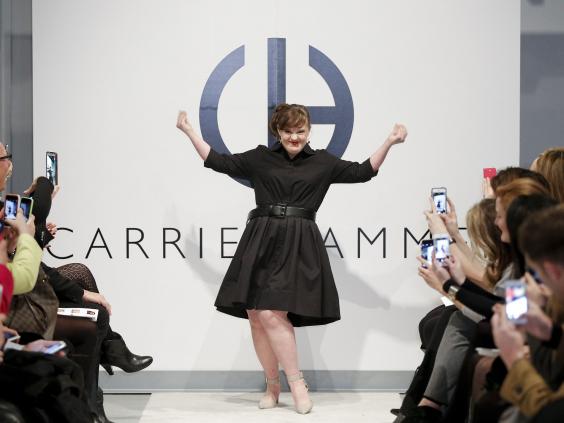

These are but a handful of the disabled models working around the world. Featuring in magazines and on runways.

Australia does have disabled models.

Madeline Stuart has walked in New York Fashion Week amongst others and has featured in numerous magazines, and now has her own clothing line, 21 Reasons Why.


The lovely Angel Dixon recently featured in Target's new campaign and has walked overseas for brands such Bezgraniz Couture.


Last year model and athlete, the gorgeous Robyn Lambird (I have serious hair envy) also appeared in a Target campaign.

A post shared by Robyn The Trex Lambird (@robynlambird) on


Yet here in Australia I am yet to pick up a magazine, other than a Target catalogue, and see a disabled model. I can flip through everything from Australian Women's Weekly to Vogue and no where do disabled models appear. (Update: Turia Pitt is currently on the cover of Australian Women's Weekly as the featured interview. Whilst not modelling per se, her position on the front of a such an iconic and well-known magazine is still incredibly powerful given how few people with facial difference appear in, let alone on the front cover, of well-known magazines. Of note her first cover in 2014, was the biggest selling of that year.)

When brands and companies proudly announce they are embracing diversity, disability is never part of the campaign (Think Vogue's 2017 attempt at a diversity cover. Problematic for so many reasons, one of which was their continued obliviousness to disability in their diversity brainstorming. Or local company Myer in 2016 alerting us to their new enlightened direction to move beyond the overwhelming whiteness in their shows. With no mention of age, size, or, disability.)

Brands continue to pat themselves on the back for embracing different races, plus-sized models and more recently older models, (which is all fantastic) 
but disability continually fails to be included in the mix.


Which leads to the question: do disabled people simply not exist in the minds of the Australian fashion industry?

I am a disabled 44-year-old woman who loves fashion. I use a walking stick and a wheelchair. I wear compression stockings. I dress up nearly every day. I celebrate self-expression through fashion. And I want to see myself and other disabled people represented on the catwalk and in the pages of multiple magazines. I want to know that the Australian fashion industry sees me, embraces me and values my existence. While I did love seeing Angel Dixon in the Target campaign recently, I am acutely aware how rare this experience is. With adults with disabilities largely forgotten by the industry.

I am not alone in my frustration. It is one shared by many other disabled people in Australia. Many of us, myself included, have not been happy to accept the status quo, instead creating our own fashion world on platforms such as Instagram (was rather excited to be part of this article by Revelist). We share our fashion expression and tips for dressing with style when using various mobility aides. We share knowledge of brands embracing disability (eg Target, Nordstrum, FTL Moda) or creating specifically with disability in mind (eg Bezgraniz Couture, Sue, Vanilla Blush). We note those companies who see our adaptive needs as a means to express ourselves (eg Alleles, Adaptive Limb Company, LympheDivas, Top and Derby, IzzyWheels).  In the process our presence is actively challenging societal perceptions of what disability looks like and how we live our lives.

Disabled people are actively engaging in fashion. 
Why isn't the industry here in Australia engaging with us? 

The vast majority of fashion brands including, or actively making clothing for disabled people are still located overseas (with current dollar conversion rates and postage, frequently making them inaccessible to Australian residents).

When will we see the same push for the inclusion and valuing of disabled people by the fashion industry here in Australia? We are continuing to lag behind the rest of the world when it comes to disabled models on the runway and in fashion magazines. Target and Kmart are still two of the few companies here in Australia including disabled models in their advertising, especially when it comes to adult fashion.

Organisations such as Startling with Julius are actively advocating for the inclusion of disabled people in advertising. Thanks to their hard work there has been a slow but perceptible increase in the inclusion of disabled children in campaigns. However adult representation apart from the aforementioned campaigns, remains sorely lacking.

It's not good enough.

In Australia 1 in 5 people are living with some form of disability (roughly 4,756,000 people). Why aren't we represented in advertising, in magazines or on the catwalk? Overseas numerous fashion weeks and magazines are including disabled models. From Russia to Ethiopia, South Africa to Mexico, Japan, the USA, Hungary, the Ukraine, the UK, the Netherlands, the list goes on, all have included disabled models. If they can see the value of inclusion and embrace the beauty of difference why don't we?

I ask the Australian fashion industry once again,

"Why don't you see me?"

Michelle

Musical accompaniment had to be the amazing Viktoria Modesta with Prototype.

Wednesday, 15 March 2017

Yes, Disabled People Wear Lingerie.

[Image: black and white photo of a walkingstick in a window with a bra handing from the handle. And because it didn't occur to me to dust, there is a scattering of dead black insects and some cobwebs on the white windowsill.]

Last year I rolled into a lingerie store to check out a rather fabulous emerald green bra and undie set that had caught my eye in their display window. I rolled around the tightly packed store grazing racks of g-strings and t-shirt bras until the inevitable happened. On the back of Lucille (my electric wheelchair) are a set of handles that allow another person to push the chair if I run out of batteries or become too incapacitated to manage my joystick. I forget they exist 99% of the time. They are behind me and I am highly unobservant even on my good days. The 1% of times are times like that day when, dazzled by the wall of lace and satin, I had deviated 1° off my safe path and caught a rack of lace teddies on a handle. I promptly pulled the entire rack of teddies to the floor. I stopped mortified as the loud clatter of plastic hangers dwindled into silence. Looked back to find a pile of plastic and lace on the floor and a single sad white teddy hanging haphazardly off one of my handles. I waited for assistance.

And waited.
And waited.

The attendant didn't even look at me and I was faced with a set of tight, black clad shoulders that either belonged to the ghost of a past store attendant, or, she clearly had no intention of turning around. Embarrassed and leaning precariously from my chair, I tried to pick up the pile. When it became clear my attempts were going to end in a possible worsening situation, that of an uncoordinated disabled woman plummeting from her chair to take out an even larger display of lace and satin, I leaned back. I twisted. Grabbed the lone teddy from my handle. Hung it back up on the chrome display pole. And rolled out. When I looked back the attendant was clearly relieved I was gone.

At no point from when I rolled in to when I left did she make eye-contact. She saw me enter, turned her back and continued to speak to the only other woman in the store. I felt like I was back in high school when the cool girls would deliberately ignore my decidedly uncool self. The classic exclusionary tactic employed by teenage girls throughout history: turn your back and continue to talk like the uncool girl never entered the room and doesn't even exist.

It was clear that I was not welcome. 
A disabled woman in a lingerie store? 
No thanks.
Too difficult.
Too ick.
Too "why would a disabled woman even want lingerie?"

I know I'm not alone in this experience and have had multiple conversations with  disabled friends who have felt excluded or discriminated in lingerie stores. People have difficulty with the concept of disability, and in turn interacting with disabled people. But the combination of disability and sexuality makes people profoundly uncomfortable. However that sexuality is expressed, from purchasing lingerie to dating, exploring sexual identities, or participation in different lifestyles, it quickly becomes clear that society doesn't want that connection to exist. (There was a massive blow up on a popular disability site a few years ago when a sex positive story about a disabled adult attending a completely legal sex party in Canada was published. The gentleman in question found it a celebratory, inclusive and empowering event. Responses were clearly split between those who did and didn't have lived experience of disability. Disabled commenters were predominantly happy for him. However, many parents of disabled children, carers, and adults without lived experience of disability were horrified even threatening to report the event and the group to authorities. Similar responses also occur when there is mention of the use of sex workers to aid disabled people in exploring their sexuality.)

Disabled people are seen as asexual by many. Or undesirable. Or as frequently comes up in comment boards when disability and sexuality are discussed, special snowflakes, or forever children who should not be sullied by icky notions like sexuality. Many simply go straight for the "how could a disabled person possibly consent to sex or any expression of sexuality?" That there are different types of disability, that we could consent, or be taught about bodily autonomy, choice or safe sex practices doesn't even enter the public conscience. That sex is a part of the human condition and should be considered a human right for non-disabled and disabled people alike is rarely discussed. We are not supposed to be confident or feel attractive. We are not supposed to own our own experience. We are to inhabit the realms of pity or inspiration and never dare to mention that our wants and needs are strikingly similar to those who are not disabled. And the idea that we might simply want to wear some hot lingerie that makes us feel confident, for ourselves, not anyone else, isn't even in consideration. The woman in the lingerie store let me know that I wasn't welcome. And she definitely didn't see me as a potential customer.

Pfft to you rude woman! I'll spend my dollars elsewhere.

Yesterday, NZ company Lonely Lingerie's new campaign came to light. It stars 57-year-old Mercy Brewer. The photographs show a confident older woman wearing some fabulous sexy lingerie. Stylistically the photographs and the lingerie are no different to what you'd see in a campaign with a younger model. This is not the conservative, stodgy, lingerie we are routinely shown in advertising directed at older women. It is unashamedly sexy. And it is fabulous. It defies so much of the narrative around older women. Women in Mercy's demographic tend to be framed as mothers or grandmothers, and advertising and society tells us there is only one acceptable form of mother/grandmother. I can't help think of Madonna wearing a revealing outfit at the Met Gala last year which was met with cries reminiscent of Maude Flanders "won't somebody please think of the children!" As if motherhood or grandmotherhood, or age, (or disability) automatically wipe away a woman's sexuality and self-expression. As a purple-haired, side-shaved, mini-wearing, 43-year-old, disabled woman and mum of two son's, I call BS on that.


[Image: An older woman leans against a wallpapered wall wearing a black bra. The entire photo is in sepia tones. Text below says "Aging can bring a quiet confidence unknown in youth, what use is beauty without confidence to recognize yourself?" -Mercy Brewer #LonelyLingerie]


I read a piece discussing the Lonely Lingerie campaign that stated that age was the final frontier of lingerie advertising. I would have to disagree and say that disability continues to be the final frontier as we so hard pressed to find any disabled women, or men, in lingerie campaigns. And an older disabled woman? I swear I belong to a group of mythical women dwelling in a land that time and advertisers forgot. I met a woman just like me at a concert recently. She had no idea that other older, less conventional, disabled women in wheelchairs existed. We bonded on shared experience and anger that we are never represented in advertising, or media, or life.

While the lack of disabled women in advertising is clear, it is equally apparent that even the concept of such a thing as diverse women's bodies remains controversial (that mythical land of diverse women is pretty bloody full! And only a few hardy adventurers/advertises seem willing to go searching for those far lands.). There is a particular part of society that is vehemently opposed to diverse women who are comfortable and confident living in a body that much of society and the majority of advertising would prefer be hidden away. Add in any hint of sexuality for those who have a different body type from the dominant advertising norm, and people become even more uncomfortable and frequently vicious.

Today I watched as US company Livi Rae Lingerie's was told that their images of diverse body types, including a disabled woman in a wheelchair were in "poor taste" and should be removed. The images show confident women speaking for and about themselves. These women, like the Lonely Lingerie campaign, defy the standard lingerie images we see that use young, thin, white women/teenagers. When this was revealed, an online campaign developed #NoShameLiviRae, and following the overwhelming publicity and backlash, the decision was reversed. How they were in anyway offensive boggles the mind. Stylistically these photos are definitely more on the conservative side of the ledger, especially when compared to the Lonely Lingerie campaign. And still someone got their knickers in a knot (all puns intended).

Won't somebody think of the children!


[Image: A smiling woman sits in her wheelchair wearing a beige strapless bra and white half petticoat. Caption says: Real Women. "I want to be an example MS or not. People can do what they set their mind to. I always felt the desire to encourage anyone, at any age to never give up and to believe that they are amazing and perfect just the way they are. Even a girl in a wheelchair can be influential" -Stacey Shartley LiviRae Lingerie Ambassador. Livi Rae Lingerie #RealBrasRealWomenRealStories #LiviRaeLingerie]
(Source: Livi Rae Lingerie Facebook Page)


These two campaigns are very different. But in both cases the women are confident. They are from groups who are not regularly seen in lingerie campaigns. They are expressing themselves. And owning their lives and their experience. For themselves and not for anyone else. And that makes many people uncomfortable.

Personally, I love the Lonely Lingerie campaign, and think the company could do great things for disabled representation in the lingerie market.

I want to see a disabled women shown as a confident sexual being.
I want to see what lingerie may look on a body similar to mine.
I want to see her unapologetically owning space and her image.
I want to see her giving a big F U to the naysayers. 

As an older disabled woman, simply seeing an older woman portrayed in this manner made my heart sing. If I were to see an older disabled woman portrayed in this manner I may break out in song and my best jazz hands and spirit fingers.

Diversity in advertising makes financial sense. If companies can't make the move because it is the right thing to do. Then surely attracting a wider market that will increase your profits is attractive.

Diversity in advertising is a powerful tool in changing the way we think about difference in our society.

Diversity in advertising is also powerful for those who are part of those diverse communities. It says I'm here. I'm not alone. I'm part of the community. And I have value just as I am.

I'll never go back to the lingerie store where I was ignored. But I do want to buy lingerie that makes me feel confident.

And I want to buy my lingerie from a company that sees me.

Michelle

Sing it JT!